

Your biggest manufacturing challenge might not be what you think.
Brazil is one of the world’s leading food producers, supplying agricultural and food products at a scale few nations can match. The country’s food processing sector had a revenue of roughly R$1.388 trillion in 2025. It accounts for 10.9% of national GDP. Every day, on average, two new food factories opened somewhere in Brazil last year, adding to an industrial base of 42,000 companies that together processed 288 million tonnes of food.
This is not a small regional industry. It is one of the largest food manufacturing bases globally, feeding domestic households and supplying 190 countries at the same time. Behind every one of those numbers is a factory floor where raw ingredients get turned into bread, biscuits, spice blends, sauces, snacks and powders.
That kind of growth puts pressure on equipment. When a bakery in Sao Paulo doubles its output or a spice manufacturer in Rio de Janeiro adds a new product line, the mixing stage becomes important. Dry ingredients that used to blend evenly in a small batch mixer may show inconsistency at higher volumes.
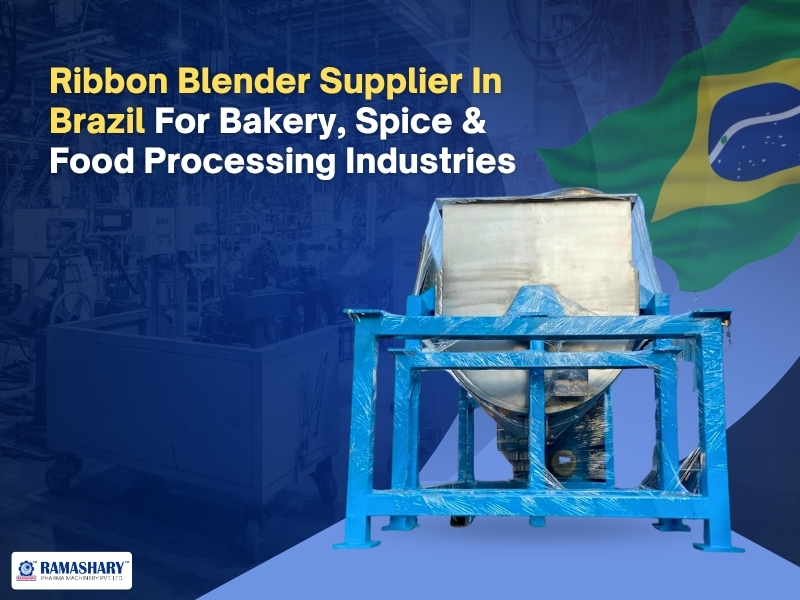
This is exactly where selecting a Ribbon Blender supplier in Brazil becomes important to a plant manager’s daily decisions. It is not a quick upgrade but the difference between a batch that passes quality control and one that gets reworked. A Ribbon Blender handles dry powders, granules and semi-solid mixes with a consistency that smaller or older equipment cannot match once volumes increase. That consistency keeps a bakery’s flour blend or a spice unit’s mix uniform from the first bag to the last.
None of this means every plant needs to rush to purchase food machinery in Rio de Janeiro or any city. It means that when the time comes to replace old equipment or plan a new line, the choice of a Ribbon Blender supplier in Brazil matters as much as the choice of machine. A blender that arrives late, breaks down in its first year or lacks proper documentation can cost a plant far more than its purchase price.
Overview Of The Food Industry In Brazil
Brazil’s food processing sector is not a niche export business. It is said to be the largest economic sector in the country. 61% of the farm produce is processed in the Brazilian food industry. 68% of the products grown or raised by family-owned farms are bought by the food and beverage industry to manufacture food products.
In 2025 alone, the industry invested R$41.3 billion, up 6.8% from the year before. Two-thirds of that capital went towards innovation and new production lines rather than simple replacement.
Exports tell a similar story. Brazil shipped processed food worth around $66.3 billion in 2024. The food technology and equipment side of this ecosystem is growing in parallel. Brazil’s food technology market is projected to expand from roughly $4.2 to $4.8 billion in 2026 to as much as $8.2 billion by 2035. Import dependence for speciality ingredients and processing inputs still sits at 40 to 45% of total volume.
Regulation adds another layer that shapes how factories operate. ANVISA requires food equipment and ingredient importers to register, provide certificates of analysis and maintain batch traceability. Associations like ABIA and ABIFISA emphasise compliance with international standards, but the process remains complex.
For a plant head trying to partner with a food equipment supplier in Brazil, these considerations are not optional. It affects the lead times, documentation and the kind of after-sales support a buyer should expect.
Put these threads together and a clear picture forms. Demand is rising, exports are climbing, investment is heavy and regulation is tightening. Growth on this scale cannot run on inefficient or undersized equipment.
A factory that wants to keep pace with real sales growth needs food processing machines in Sao Paulo or any city in Brazil that are both high-capacity and properly documented. That combination is exactly what a genuine food machinery manufacturer brings to the table.
Does Your Factory Setup Support Increasing Export Demands?
Trends In Brazil's Food & Beverage Manufacturing Industry
A few factors are defining how Brazilian food plants invest and operate right now.
1. Rising Domestic Demand & Export Ambition
ABIA’s own projections show real sales growth of 2 to 2.5% domestically in 2026, while export targets push past $70 billion. Plants are being asked to serve both markets from the same production lines, which increases expectations from a food equipment supplier in Brazil.
2. Clean Label & Natural Ingredients
Terms like natural and no preservatives are not formally defined under Brazilian law yet, which has triggered enforcement actions against misleading claims. Manufacturers are responding with voluntary certification and tighter control over ingredient blending. This addresses the need for a dependable Ribbon Blender supplier in Brazil.
3. Heavy Dependence On Imported Speciality Ingredients
Hydrocolloids, emulsifiers and enzymes make up more than 55% of ingredient value in bakery, dairy and beverage applications. 40 to 45% of total ingredients are imported. Any disruption in that supply chain puts pressure on the blending stage to make the most of every batch, with minimal waste, addressing the need for an experienced Ribbon Blender supplier in Brazil.
4. Raw Material Volatility Based On Climate
Regional droughts have hit maize harvests that are important for bakery production. Beet shortages have disrupted alternative sweeteners used in sugar-reduced dairy. When raw material quality varies batch to batch, a Ribbon Mixer Blender in Brazil has to work harder to provide a uniform output.
5. Online Research Before A Purchase
Buyers are researching suppliers online months before ever attending a trade exhibition. A food machinery manufacturer that is not visible during that research phase simply does not make it onto shortlists, no matter how good their machines are. This same shift applies to plants sourcing internationally. A plant manager in Sao Paulo comparing a domestic option against a food machinery manufacturer overseas will do that research digitally first.
6. Food Security Concerns
A handful of major companies tightly hold Brazil’s retail market. Food waste is estimated at 35 million tonnes a year, while many families still struggle with food insecurity. This makes efficient food processing more important. By improving blending cycles and reducing waste during production, manufacturers can make a real difference. That’s where they need an experienced Ribbon Blender supplier in Brazil.
Factory Floor Challenges In Brazil
Scaling does not come without friction. Talk to any plant head or production manager running a bakery, spice unit or food processing line in Brazil today and a familiar set of challenges comes up. Some of these are specific to the food industry itself. Others are shaped by Brazil’s geography, regulatory environment and supply chain reality. Here are common challenges that show up again and again.
1. Inconsistent Blending At Scale
A Ribbon Mixer Blender in Brazil that performs well in a small batch often struggles once volumes rise to meet the export demand. Uneven blending shows up as colour variation in spice mixes, dense pockets in bakery premixes or inconsistent hydration in powder blends. This is one of the clearest signals that a plant has outgrown its existing equipment and needs a machine built for higher, more uniform throughput.
2. Humidity & Tropical Climate
Many food manufacturing units in Brazil sit in humid, tropical or subtropical zones. Moisture entering powder handling equipment causes clumping, corrosion of poorly finished metal parts and bacterial risk in products that are supposed to stay dry. A typical Tray Dryer in Manaus, Sao Paulo, Rio de Janeiro or any other city built without this consideration tends to degrade faster. It applies to other machines too.
3. Compliance & Documentation Gaps
Brazil’s registration requirements around certificates of analysis, batch traceability and compliance documentation are strict. Food processing machines in Sao Paulo, Rio de Janeiro, Manaus or any city that cannot support this paperwork create challenges during audits. A machine without proper material certificates or a food equipment supplier in Brazil that cannot produce validation documents on request puts a plant’s export licence at risk.
4. Import Dependence
With a significant percentage of speciality ingredient volume imported, any disruption in international shipping, currency swings or customs delays affects production. When raw material delivery is unpredictable, plants need blending and drying equipment that can handle variable batch sizes and ingredient substitutions.
This is precisely where partnering with a reliable Ribbon Blender supplier in Brazil that understands global logistics becomes helpful against supply chain shocks.
5. Rising Production Costs
Production costs in Brazil’s food sector rose 5.1% in 2025, affected by diesel, electricity and packaging price increases. Plants are under pressure to get more output per unit of energy and labour. It means the food processing machines in Sao Paulo, Manaus, Rio de Janeiro or any other city should have lower cycle times and reduced maintenance downtime.
6. Technical Support Gaps
As new plants open, technicians who know how to operate, clean and maintain advanced blending and drying machinery become important. A Ribbon Blender supplier in Brazil that leaves a plant to figure out commissioning and maintenance on its own creates a hidden cost. This cost only shows up months later, in the form of downtime.
7. Local Regulation & International Export Standards
A plant selling into both the domestic Brazilian market and export markets in the US, Europe or the Middle East has to satisfy two sets of standards at once. Equipment that only meets local expectations, without documentation aligned to international GMP norms, can quietly limit a company’s ability to grow its exports. That’s why a dependable supplier of food machinery in Rio de Janeiro, Manaus, Sao Paulo or across any other city is needed to support compliance.
Every one of these challenges points back to the same underlying need. Global supply chain disruptions, tropical operating conditions and tightening compliance rules all show the importance of a machinery partner. Such a partner should manufacture machines for long-term value, provide documents for compliance and support after installation.
Can Your Production Line Handle The Next Demand Surge?
Selecting The Ribbon Blender Supplier In Brazil
Brazil is not one uniform market. A plant in Sao Paulo faces different logistics realities than a plant in Manaus. A Ribbon Blender supplier in Brazil should understand those differences rather than treat the whole country as a single delivery zone.
Sao Paulo
This state remains the industrial heart of Brazil’s food sector, home to a dense cluster of bakeries, spice processors and packaged food companies. Buyers searching for food processing machines in Sao Paulo are usually working within tight production schedules, since the region’s plants tend to run multiple shifts and cannot afford long equipment downtime.
A Ribbon Mixer Blender in Brazil made for a Sao Paulo facility needs to arrive with clear installation support, because the region’s competitive manufacturing base leaves little room for a slow commissioning process.
Rio de Janeiro
Port access makes Rio de Janeiro a natural entry point for imported machinery. Demand for food machinery in Rio de Janeiro spans everything from bakery premix lines to beverage powder blending. A plant sourcing food machinery in Rio de Janeiro should confirm that the supplier fulfils these requirements.
Manaus
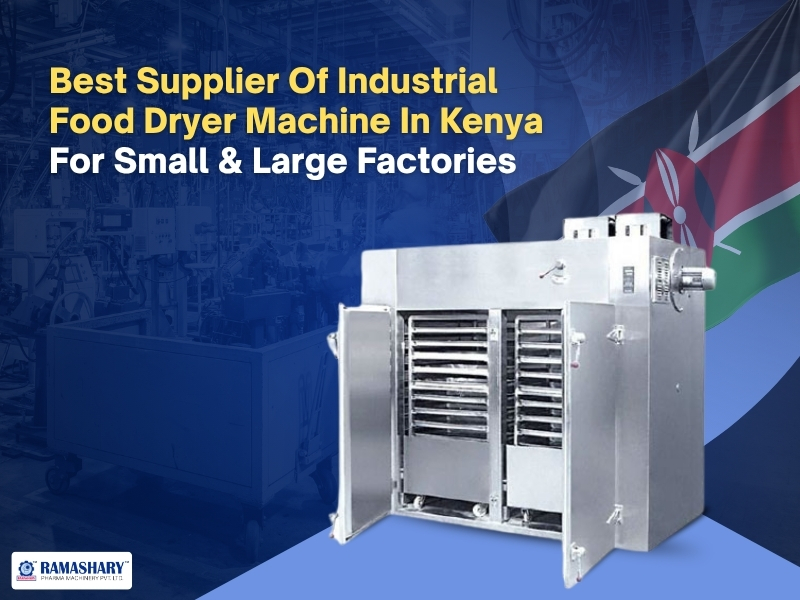
The Manaus Free Trade Zone brings its own mix of tax incentives and humidity-related operating challenges. Food and beverage plants here often need drying equipment as much as blending equipment, which is why demand for a Tray Dryer in Manaus runs alongside demand for Ribbon Blenders.
High ambient humidity in the Amazon region makes moisture control a daily operational concern. Thus, a Tray Dryer in Manaus needs to be built with corrosion-resistant, hygienic construction that can withstand continuous humid operation without compromising product quality.
Belo Horizonte, Curitiba & Porto Alegre
Beyond the three hubs above, Brazil’s food processing base extends into strong secondary markets in Minas Gerais, Parana and Rio Grande do Sul. These regions are increasingly looking for the same combination that Sao Paulo and Rio de Janeiro buyers want: a food machinery manufacturer who provides end-to-end documentation and supports the equipment after installation, regardless of which state the factory is in.
The takeaway for any plant manager is simple. Whether you are comparing food processing machines in Sao Paulo or specifying a Tray Dryer in Manaus for a humidity-heavy facility, the underlying equipment performance should not change based on location. What should change is how the machinery has been made for your concerns. That is worth asking about directly before signing a purchase order with any food equipment supplier in Brazil.
A Practical Checklist Before You Get a Ribbon Mixer Blender in Brazil
A few considerations can help you before finalising a purchase order with a Ribbon Blender supplier in Brazil. These considerations are built around the questions procurement teams tend to forget until it is too late.
- Confirm the certification. Understand what documentation is provided by your Ribbon Blender supplier in Brazil before placing the order.
- Match capacity to your actual batch size, not your theoretical maximum. Oversized equipment wastes floor space and energy, while undersized equipment creates the inconsistency problem.
- Ask about electrical standards. Equipment shipped for use as food machinery in Rio de Janeiro or any city needs to match Brazil’s local infrastructure.
- Clarify installation responsibility. Know exactly who commissions the Ribbon Mixer Blender in Brazil once it arrives at your facility and what happens if support is needed after sales.
- Confirm spare parts availability. Ask whether important spare parts for your Ribbon Mixer Blender in Brazil are provided, since this directly affects how quickly a breakdown gets resolved.
- Plan for growth, not just current volume. If your export ambitions align with Brazil’s growth vision in food exports, choose food processing machines in Sao Paulo, Rio de Janeiro or Manaus sized for where your plant is heading, not only where it stands today.
Working through this list before signing a purchase order takes time. Skipping it can cost months of downtime later.
Leading Ribbon Blender Supplier In Brazil
Ramashary Pharma Machinery Pvt. Ltd. is a Mumbai-based, ISO and GMP-certified company. We are a manufacturer, supplier and exporter of 20+ dedicated machines for the pharmaceutical, food, beverage, cosmetic, chemical and allied industries. With 40+ years of experience and 700+ site installations, we understand the unique challenges faced by every industry.
It positions us as more than just a Ribbon Blender supplier in Brazil. It makes us a long-term machinery partner for small and large-scale food manufacturers. Here’s how our end-to-end solutions help solve the above challenges:
1. Support For Scaling Production
As production volumes grow, maintaining blend uniformity becomes challenging. We address this by understanding your production requirements before manufacturing and supplying the Ribbon Mixer Blender in Brazil. Our machines are made for scalability and your business growth. Thus, they are ideal for both small and large-scale food manufacturers.
2. Engineering For Brazil's Tropical Climate
Brazil’s humid operating conditions demand equipment built for long-term reliability. That’s why, as a food machinery manufacturer, we use hygienic, corrosion-resistant SS 304/316L for Ribbon Blenders. These machines are easy-to-clean and contain CIP/SIP features that avoid water wastage.
Closed system processing avoids getting particles in contact with external moisture, which protects the material integrity. Similarly, the control panels and IoT readiness help maintain accurate temperature and speed inside the machines. This positions us as a leading supplier of food machinery in Rio de Janeiro, Manaus, Sao Paulo and all across Brazil.
3. Support For Compliance
We follow CE, WHO-cGMP, GMP, ISO 9001:2015, ASME BPE, SCADA, 21 CFR and Industry 4.0 standards and international validation protocols. Our end-to-end solutions include complete documentation and provision of IQ, OQ, DQ and FAT reports and MOC certificates.
What makes us a leading food machinery manufacturer is our control over the process. All machines are manufactured at our full-fledged manufacturing unit in Mumbai, India, using advanced machines that help us control every aspect of quality.
4. Support For Different Formulations
As an experienced Ribbon Blender supplier in Brazil, we design, engineer and manufacture machines made for supporting diverse formulations with multiproduct versatility. It turns out to be helpful especially during supply chain disruptions where raw materials might be costly or not available at the expected time.
5. Decrease In Production Costs
Production costs are significantly affected by energy consumption and downtime and that’s where we help as an experienced supplier of Ribbon Mixer Blender in Brazil. We design machines with a focus on energy savings, maximum uptime, ease of operation, better ROI and operator safety. It makes us ideal for manufacturers looking for a Ribbon Blender supplier in Brazil for long-term business growth.
6. End-To-End Solutions
We provide support throughout the pre-fabrication, fabrication and post-fabrication stages, which avoids the need for multiple vendors. In the pre-fabrication stage, we understand your requirements, conduct process and space analysis and suggest the best solutions.
In the fabrication stage, we design, engineer and manufacture the machinery according to your requirements. Our post-fabrication stage support includes installation, commissioning, end-to-end documentation, operator training, ongoing after-sales service and assured spare parts, which positions us as a trustworthy food equipment supplier in Brazil.
Can Your Equipment Support Your Long-Term Growth Plans?
The Working Principle Of The Ribbon Blender
A Ribbon Blender supplier in Brazil is not the only one a plant needs. A plant needs different machines, but handling different vendors is hectic. Ramashary Pharma Machinery Pvt. Ltd. supplies a wider range of equipment that can work alongside the Ribbon Blender across a typical food processing line.
1. Mass Mixer
The Mass Mixer is made for high shear mixing of both dry and wet materials, commonly used before drying or tabletting-style processes in food and allied industries.
The machine uses a set of impellers, typically a main mixing blade and a chopper blade, rotating at different speeds inside a bowl. The main blade handles bulk mixing and lifts material through the batch, while the chopper blade breaks down lumps and controls granule size.
Dry powders are loaded into the bowl, a binding liquid is introduced if wet granulation is required and the impellers work together to fold, shear and granulate the mass into a uniform, controlled particle size before discharge. Its closed system processing makes it an ideal food machinery in Rio de Janeiro, Sao Paulo, Manaus and all across Brazil.
Application
It is used for making uniform food granules for instant mixes, pre-granulated bakery ingredient blends and base powders that require tighter particle size control than a Ribbon Mixer Blender in Brazil alone can provide. This is why plants sourcing food processing machines in Sao Paulo often look for a Mass Mixer.
2. V Blender
The V Blender is designed for dry powders and granulated materials that need gentle, low shear blending without degrading particle structure.
Two hollow cylindrical shells are joined at an angle of up to 90 degrees, forming a V shape. As the vessel rotates on its axis, material inside repeatedly splits at the junction of the two arms and recombines, creating a tumbling, folding motion.
Material loaded into the V-shaped vessel divides into the two arms during each rotation, then merges again at the base of the V. This split and recombine cycle repeats until the blend reaches uniformity, after which the batch is discharged through a bottom valve.
Applications
It is used for making dry spice powder blending, flour blends and dry beverage powder mixes where gentle handling protects fragile or fine particle ingredients from breakage.
3. Conta Blender
The Conta Blender is built for dust-free transfer and blending of powders and granules at different stages of production, particularly where hygiene matters.
It uses a four-cornered bin container with an integrated lifting mechanism. It is based on a tumbling principle where the bin itself rotates at a set RPM rather than relying on an internal agitator.
The bin is loaded, sealed and mounted onto the machine, which lifts and rotates it at the required speed. A sensor confirms the bin is correctly seated before the blending cycle can begin.
Applications
Milk powder blending, cocoa powder mixing and flavouring agent incorporation, where minimising dust and contamination risk during transfer is as important as the blending itself.
4. Fluid Bed Dryer
A Fluid Bed Dryer removes moisture from wet granules or powders quickly and evenly. Hot air is passed upward through a perforated bed holding the wet material at a controlled velocity, suspending the particles in a fluid-like state. Every particle is surrounded by hot air rather than only the top layer.
Wet material is loaded into the product container, hot air is introduced from below at a set temperature and airflow rate and the particles lift and circulate within the air stream until moisture content drops to the target level. After this, the dried product is discharged.
Applications
It is used for drying of granulated food premixes, powder blends and any semi-moist ingredient that needs to reach a stable, shelf-ready moisture level before packaging. Thus, food manufacturers opt for the FBD machines due to their advantages.
5. Starch Paste Kettle
The Starch Paste Kettle prepares starch-based binder pastes used in tablet coating, food binding applications and certain bakery or confectionery formulations that require a cooked starch gel.
The kettle uses a jacketed vessel with controlled steam heating, combined with a slow-speed agitator, to cook raw starch and water into a lump-free paste at a consistent viscosity.
Starch and water are loaded into the kettle and heat is applied through the jacket while the agitator continuously stirs to prevent lump formation. The mixture is held at temperature until it reaches the required gel consistency before being discharged for use in the next process step.
Applications
It is used for making binder paste for granulation processes, bakery premixes and starch-based thickening pastes used in sauces, fillings and certain confectionery applications.
6. Double Cone Blender
The Double Cone Blender handles gentle blending of dry powders and granules with similar density and particle size. It is ideal where minimal shear and low product damage matter more than mixing speed.
Two truncated cones are joined at their wider ends by a cylindrical section and the entire vessel rotates on a horizontal axis. Material is loaded up to a specific volume. As the vessel rotates, the material tumbles from one cone into the other, folding and blending gradually until uniformity is reached. Finally, discharge occurs through the discharge outlet.
Applications
It is one of the best food processing machines in Sao Paulo, Manaus, Rio de Janeiro and all across Brazil for blending homogeneous dry food powders, small pellet mixing and low-density powder combinations such as certain instant drink mixes and fine spice powders.
7. Vibro Shifter
The Vibro Shifter sifts and grades powders and granules by particle size, removing lumps, foreign particles or oversized material before or after blending.
A circular sieve deck, fitted with mesh screens of a chosen size, is mounted on springs and controlled by a vibration motor that creates a gyratory motion across the deck surface.
Material is fed onto the top of the sieve deck and the vibration motor’s motion causes the material to spread outward and downward across the mesh. It helps correctly sized particles to pass through while oversized particles or contaminants are separated and discharged from a different outlet.
Applications
As a leading food machinery manufacturer, Ramashary Pharma Machinery Pvt. Ltd. provides this machine for final quality screening of spice powders, flour and bakery premixes before packaging. It can also be used for pre-blend screening to remove clumps from moisture-sensitive powders affected by Brazil’s humid conditions.
Are Environmental Changes Affecting Your Food Production?
FAQs
1) How to find an ideal Ribbon Blender supplier in Brazil?
An ideal Ribbon Blender supplier in Brazil is one that offers compliant equipment, batch sizes matched to your production volume and proven after-sales support. Ramashary Pharma Machinery Pvt. Ltd. meets these criteria, with export experience across multiple countries.
2) Is it necessary to have a Tray Dryer in Manaus for humid climate food production?
Yes, a Tray Dryer in Manaus is often necessary for plants producing moisture-sensitive powders or granules. The Amazon region’s high humidity increases moisture reabsorption after standard drying if the equipment is not built for continuous humid operation.
3) How do I know if my existing Ribbon Blender is limiting production?
As production grows, your equipment should be able to maintain the same blending consistency while handling larger batch sizes. If you are noticing uneven blends, longer mixing cycles, higher rejection rates or production bottlenecks, it may be time to evaluate your existing process or consult an experienced Ribbon Blender supplier in Brazil.
4) Can your Ribbon Blenders reduce product wastage?
Yes, as a food equipment supplier in Brazil, we provide machines designed for reducing product wastage. Additionally, our machines contribute to better material utilisation by improving blend uniformity and reducing the need for batch rework.
5) We are planning to expand our production capacity. When should we involve a machinery supplier?
The earlier, the better. Involving your machinery partner during the planning stage allows production layouts, equipment sizing and process requirements to be evaluated before investment decisions are finalised. It helps avoid costly modifications later.
Conclusion
Brazil’s food processing sector is not slowing down. The pressure on factory floors to mix, dry and package at higher volumes with tighter consistency is only going to grow. The challenges, from tropical humidity to documentation to rising production costs, are not going away on their own. They get solved at the equipment level.
Ramashary Pharma Machinery Pvt. Ltd. brings a proven track record across several industries and a wide range of equipment. It is ideal for food manufacturers looking for a Ribbon Blender supplier in Brazil who understands compliance, climate and scale all at once. Because that is what turns a food equipment supplier in Brazil into a long-term machinery partner rather than a one-time service provider.
Let’s connect today and find out the ideal capacity of the food machinery for your business growth.