Ramashary.com

When looking for reliable food processing equipment in Canada, businesses can find high-quality food equipment in Canada for various processing and manufacturing needs. From a durable ribbon blender in Canada and efficient ribbon mixer Canada solutions to advanced food dehydrator machine Canada systems, the right equipment can improve productivity and consistency. As an experienced food machinery manufacturer, we provide dependable food processing equipment Canada solutions, including meat processing equipment Canada and specialized machinery for different food industries. We also work as a trusted food machinery supplier in Canada, offering suitable solutions for businesses searching for restaurant equipment suppliers in Canada and reliable processing machinery.


CGMP Food Processing Equipment in Canada

If you run a food manufacturing plant in this country and you are searching for high-quality food processing equipment in Canada, you already know the pressure is real. Margins are tight. Labour is scarce. Recalls make headlines. Buyers want cleaner labels, more protein and lower prices at the same time.

In that environment, the machine on your floor is not just a machine. It is the difference between a profitable shift and a scrapped batch. Canada’s food and beverage sector is under strain. Sales are growing on paper while volumes shrink. Costs keep climbing.
When you put those forces together, one thing becomes clear. You cannot run an advanced plant on inefficient equipment and hope for the best. You need customised, GMP-compliant, hygienic and high-quality food equipment in Canada that holds tolerances, gets cleaned fast and keeps running.
This is where the right food machinery manufacturer and supplier earns its place. A good supplier does more than ship a crate. It engineers the machine to your product, installs it, trains your team, stocks your spares and answers the phone.

Canada's Food Industry - An Overview

Canada’s food and beverage processing industry is the country’s largest manufacturing sector. Reportedly, in 2022 it recorded sales of goods manufactured worth $156.5 billion; it accounted for 18.2% of total manufacturing sales and for 1.7% of the national Gross Domestic Product (GDP).
Reportedly, it is also the largest manufacturing employer and provides employment for approximately 300,000 Canadians. That is the scale of the market you are competing in.
The sector is broad and deep. The industry was made up of nearly 15,000 establishments in 2024, contributed $35.2 billion to GDP in 2023 and directly employed over 315,000 people in 2024. Around 8,800 of these are processing businesses that employ at least one person, and the vast majority are small or medium-sized, with roughly 91% having fewer than 100 paid employees. In other words, most food processing equipment in Canada is bought by SMEs who cannot afford a machine that fails.
Exports matter too. Canadian processed food and beverage exports reached a record of nearly $60 billion in 2024 and account for a significant share of total national exports. Around 70% of all processed food and beverage products available in Canada are sourced domestically.
That domestic strength is exactly why demand for reliable food equipment in Canada keeps rising. If you make it here, you need machines that meet Canadian food safety expectations and export-market standards at the same time.
The mix of products is led by meat. Reportedly, Canada’s leading processing sectors in 2024 were meat products at roughly $30 billion (26%), followed by dairy, bakery and tortilla, and other food products at about $13 billion each (11%).
This is important context for anyone looking for meat processing equipment in Canada or blending and drying gear for protein products. Meat, dairy and bakery depend on precise mixing, cooking, coating and drying.
Here is the tension. While the market is large, growth is not being driven by consumption. The food and beverage manufacturing sales are reportedly expected to increase 0.8 per cent in 2026, driven by higher prices, while sales volumes are expected to decline by 0.7 per cent, marking a fourth consecutive year of falling volumes.
The gap between modest sales growth and declining volumes highlights the demand challenge facing food manufacturers. When you sell fewer units at higher cost, every point of yield, every avoided rejection and every hour of uptime matters more. That is the commercial case for high-quality food processing equipment in Canada in one sentence: when volumes are soft, efficiency is survival.
So the need is clear. Canadian manufacturers need customised, hygienic, GMP-aligned food equipment in Canada that raises yield, protects food safety and lowers cost per unit. Also, they need a food machinery manufacturer and supplier who will stand behind it.

Planning to Increase Production Without Expanding the Plant?

7 Trends In Canada's Food Industry

The machines you buy today have to fit the market of tomorrow. Here are seven trends pushing food manufacturers toward better food equipment in Canada.

1) Automation & AI

In food manufacturing, automation is now a competitive requirement. Manufacturers that ignore automation might fall behind. Not just in export, but domestically. Labour is scarce, so plants are automating production and shifting people into warehousing and shipping roles. This raises demand for automated, PLC-ready food processing equipment in Canada.

2) Protein Is the Headline

There is a broad shift toward protein across seafood, poultry, pork, beef and value-added products such as high-protein yoghurt. Manufacturers are reformulating around protein, which means more blending of powders, more marinade and sauce cooking and more drying. That plays directly to mixers, kettles and dryers.

3) Clean Label & Minimally Processed Plant Foods

Consumers are moving away from imitation meat toward authentic, minimally processed plant foods with clean ingredients. Fewer additives means processing has to be gentler and more precise so the product holds together without chemical crutches.

4) Value-Seeking Consumers

Canadians have not stopped buying food; they have changed how they decide. Price sensitivity is high and revenue is being driven by price rather than volume. Manufacturers must cut cost per unit and that starts with efficient food processing equipment in Canada.

5) Made In Canada & Reshoring

Amid trade tensions and tariffs, the Government of Canada is promoting voluntary ‘Product of Canada’ and ‘Made in Canada’ labels and there is a push to build domestic processing capacity. Administration notes new federal support for processing capacity in rural and remote areas. More domestic processing means more demand for quick and accurate food processing equipment Canada.

6) Sustainability & Energy Efficiency

Waste-reduction and plant-based initiatives are spreading and energy is a growing cost line. Manufacturers want food machinery manufacturer and supplier that provides machines that consume less power, waste less product and clean with less water. Energy-efficient design is now a purchasing criteria.

7) Food Safety, Traceability & Transparency

AI-driven supply chain tools have moved from pilot projects to core systems and regulators and buyers expect real-time traceability. Hygienic, easy-to-clean, contamination-resistant food processing equipment Canada is central to meeting these expectations.

The Food Industry In Canada's Key Cities

Canada’s food story is regional. Here is how the sector looks in some major hubs and why each one needs high-quality food processing equipment in Canada.

a] Toronto (including Mississauga and Brampton)

The Greater Toronto Area is the beating heart of Canadian food processing. The City of Toronto describes its food cluster as the second largest and third fastest growing in North America, with annual sales of around $15 billion.
Some 25,000 jobs sit in food processing inside the city, about 12% of total industrial employment. The wider Toronto region’s food and beverage sector employs more than 64,000 workers with annual wages of about $3.2 billion.
Just west, Brampton was ranked Canada’s top food and beverage processing cluster by Business Facilities Magazine in its 2026 Global Rankings. Brampton’s food and beverage industry contributes more than $1.3 billion to Canada’s GDP, with about 8,500 people across 300 companies being employed.
Mississauga is described by its economic development office as one of Canada’s largest food and beverage clusters, hosting a dense network of manufacturers and distributors. For plants across the GTA, competition for shelf space and labour is fierce, so reliable food equipment in Canada is a baseline requirement.

b] Montreal & Quebec

Quebec has a significant food-processing base. Reportedly, the province’s food-processing manufacturing shipments reached $39.6 billion in 2024. Food manufacturing itself accounted for $33.4 billion, while beverage and tobacco manufacturing contributed another $6.1 billion.
For machinery suppliers, the size of this market matters because manufacturers across these categories require food processing equipment Canada for mixing, blending, processing, drying, handling and related production operations.
Reportedly, Quebec’s total manufacturing revenue reached $228.1 billion in 2024, an increase of 0.4%. Within the province’s manufacturing sector, food manufacturing was one of the major subsectors, although its revenue declined by approximately $0.6 billion during the year.
This creates an interesting situation for food manufacturers. The market is large, but manufacturers cannot simply rely on market expansion. Production efficiency, consistent output and better utilisation of food processing equipment in Canada become increasingly important when manufacturers are operating in a competitive environment.

c] Vancouver & British Columbia

British Columbia has around 3,200 food and beverage processing businesses that convert locally sourced and imported ingredients into a diverse range of value-added products. These include meat and seafood products, dairy, processed fruits and vegetables, alcoholic and non-alcoholic beverages, sauces and condiments, functional foods and bakery products.
By sales, food and beverage processing ranks as British Columbia’s second-largest manufacturing sector. In 2021, the industry generated more than C$12.6 billion in sales, contributed approximately C$3.6 billion to the province’s GDP and supported employment for over 40,000 people across B.C.
The Lower Mainland, which includes Metro Vancouver, represents the highest concentration of the sector in the province and is particularly known for its production of dairy products, seafood, functional foods, bakeries, and craft beverages.
A report identifies meat product manufacturing as British Columbia’s highest-grossing food-processing subsector in 2022, with sales of approximately C$2.2 billion. Dairy processing followed closely at C$2.1 billion while animal food manufacturing recorded around C$1.3 billion in sales. This diverse, quality-focused base is a strong market for hygienic food processing equipment in Canada.

d] Calgary & Alberta

Calgary’s food manufacturing sector is the largest of the city’s 21 manufacturing sub-sectors, with around 113 food facilities in the city adding value to Alberta’s rich agricultural base. Across Alberta, about 5,450 people work as food and beverage processing labourers, mostly in NAICS 311 and 312.

Alberta is investing heavily in agri-food innovation and digital transformation, positioning the province as a technology-forward market for automated food equipment in Canada. Beef, grain milling and speciality foods anchor the local processing.

e] Winnipeg & Manitoba

Manitoba’s food and beverage processing industry holds the leading position among the province’s manufacturing sectors, representing approximately 33% of total manufacturing sales in 2024. Food manufacturing sales climbed from C$4.9 billion in 2019 to a record C$8.95 billion in 2024. The industry also supported 16,365 direct jobs in 2024, making it the province’s largest manufacturing employer.
On the other hand, Winnipeg’s protein and plant-processing strength makes it a prime market for blending, drying and mixing equipment.

Do Your Machines Spend Too Much Time On Every Batch?

How Food Machinery In Canada Affects Total Cost Of Production

The cost of food processing equipment does not end with the purchase order. For a food manufacturer, the real cost is determined by how the food processing equipment Canada performs throughout its operating life. Energy consumption, labour requirements, processing time, product losses, maintenance and downtime can all influence the cost of every batch.
A machine with a lower purchase price may not always be the more economical option if it increases operating costs over time.

a] Processing Time

Every extra minute in a production cycle affects available capacity. If mixing, drying, milling or another process takes longer than necessary, fewer batches can be completed within the same production schedule. This can limit output without requiring a visible expansion of the plant.
When a food machinery supplier in Canada is to be selected, the equipment should therefore be evaluated not only on its rated capacity but also on how its operating cycle fits into the overall production process.

b] Labour Requirements

Manual loading, material transfer, monitoring and discharge can increase the amount of operator time required for each batch. This becomes more significant when production volumes increase. Reducing unnecessary manual intervention through suitable equipment design, material handling systems or appropriate automation can help manufacturers use their workforce more effectively.

c] Energy Consumption

Energy costs can become a significant operating expense in processes involving heating, drying or extended equipment operation. The important consideration is not simply how much energy a food equipment in Canada uses at any given moment. Manufacturers should also consider how long the equipment needs to operate to complete the required batch. A shorter and more efficient process can affect the total energy consumed per batch.

d] Product Loss & Material Retention

Product loss can occur during loading, transfer, processing and discharge. Even a small amount of material lost from every batch can become a meaningful cost when production volumes are high.
The design of the food machinery in Canada should therefore be based on how materials move through the process and how effectively the product can be discharged after processing.

e] Cleaning & Changeover Time

For manufacturers handling multiple products, cleaning and changeovers can take a significant amount of production time. Food equipment in Canada that is difficult to access, clean or discharge can extend the time between batches. This reduces productive operating hours and can affect the plant’s overall throughput.
When comparing food machinery in Canada, manufacturers should consider the complete batch cycle rather than looking only at processing time.

7. Reduction In Downtime

A machine’s value does not end when it is installed. For manufacturers operating far from their machinery supplier, technical support, documentation, training and spare-parts availability become particularly important.

Top 6 Challenges Faced By Canadian Food Manufacturers

These are the problems that keep plant managers up at night. Each one strengthens the case for the right food machinery manufacturer and supplier.

1. Chronic Labour Shortage & Retirements

Canada’s food and beverage manufacturing industry could require around 142,000 new workers between 2023 and 2030, which is nearly half of its current workforce. The impact of labour shortages is already measurable. Reports indicate that one unfilled position can cost a business up to C$190 per day in lost net revenue.
When skilled workers are difficult to find, manufacturers need to improve productivity through efficient processes, reliable food processing equipment Canada and better use of available operators.

2. Food Safety & Recall Risk

The CFIA oversees approximately 155 recall incidents a year, a measure it distinguishes from total recalls (which add secondary recalls). Allergen cross-contact and microbiological hazards remain top causes. A recall is not just a cost; it is a reputation event. Food processing equipment in Canada that cannot be cleaned properly is a direct risk.

3. Ageing Equipment & Delayed Capital Investment

Reportedly, investment in capital equipment across Canada’s food and beverage manufacturing sector fell by 5.3% in 2025, with preliminary indicators suggesting that capital spending could weaken further in 2026. Delayed investment means old machines running longer, more breakdowns and slower productivity gains. That is a trap, because deferring the right purchase costs more over time.

4. Product Consistency At Scale

Value-seeking, quality-conscious buyers punish variation. Batch-to-batch inconsistency in a blend, a coating or a syrup leads to rejected lots and lost customers. Achieving true homogeneity at high volume is a mechanical problem that only a well-designed mixer or a Ribbon Blender in Canada can solve.

5. Trade Volatility & Supply Chain Disruption

Tariffs, extra taxes imposed in response to high tariffs imposed by another country and shifting sourcing have made planning harder. Food processing units are taking manufacturing capabilities back into the home country and building domestic capacity, which means installing new lines quickly and reliably. Long equipment lead times and poor after-sales support become serious risks.

6. Cleaning, Changeover & Cross-Contamination Downtime

When it comes to considering the safest food supplies in the world, Canada turns out to be a leader. However, 100% food safety can never be guaranteed and at some point in the production process, the product can get exposed to contamination.
Every product changeover is lost production time and every incomplete clean is a contamination risk. Food processing equipment in Canada that is hard to sanitise slows the whole plant and threatens food safety. Fast, hygienic cleaning and CIP/SIP ease is a competitive advantage.

Are You Losing A Lot Of Material Between Processes?

How A Food Machinery Supplier In Canada Helps Solve The Challenges

The first thing to be noted is that manufacturers do not just need a machinery provider. They need a long-term food machinery supplier in Canada who provides end-to-end solutions and helps solve the factory-floor challenges.

Ramashary Pharma Machinery Pvt. Ltd. is an ISO and GMP-certified company and an industrial machinery manufacturer in India. The company manufactures, supplies and exports high-quality machinery for the pharmaceutical, food, beverage, cosmetic, chemical and other allied industries to increase production efficiency and precision. It positions us as a leading food machinery supplier in Canada and globally.

With 40+ years of experience, 700+ site installations, 20+ industries served and a portfolio of 20+ dedicated machines, we are a food machinery manufacturer that supplies and exports worldwide. It includes key cities and provinces in Canada such as: Toronto, Montreal, Vancouver, Manitoba, British Columbia, Quebec, Ontario, etc.
For food and beverage plants, we provide equipment for mixing, blending, granulating, heating, coating, drying and liquid manufacturing and we customise each machine to the product and the scale of the business. We provide end-to-end solutions: customisation, site installation, assured spare parts, documentation, operator training and more. That is why the company positions itself as a growth partner rather than only the supplier of food processing equipment in Canada.
Here is how Ramashary Pharma Machinery Pvt. Ltd. helps with each of the challenges above.

1. Automation & Easy-To-Handle Machines

We design, engineer and manufacture machines with features that reduce manual handling, such as the tilting discharge on the Steam Heated Paste Kettle, interlocking safety mechanisms and PLC-ready automation. Fewer manual steps mean a smaller team can run more output, which directly answers the labour gap.
After installing the FBD machine or a Ribbon Blender in Canada, handling it should be easy. Though we provide advanced and automated food processing equipment in Canada, we make sure that they remain easy to handle. For that, we provide commissioning, operator training and instruction and maintenance manuals. Also, the machines are designed with operator safety and ease of use at the core.

2. Compliance In Manufacturing

As an ISO and GMP-certified company, we manufacture to international validation protocols and compliance standards. We follow CE, WHO-cGMP, GMP, ISO 9001:2015, ASME BPE, SCADA, 21 CFR and Industry 4.0 standards. Plus, IQ, OQ, DQ, FAT reports and MOC certificates are provided with the machines.
We use SS 304/316L and make sure that the machines perform closed-system processing and transfer to avoid human touch and contamination. All these factors help the food manufacturers maintain compliance and quality, which positions us as a leading food machinery supplier in Canada across Montreal, Toronto, Ontario, Vancouver, Winnipeg, etc.

3. Energy-Efficient Machines

We supply food equipment in Canada for energy-efficient operation. The machines are manufactured according to your exact requirements with a focus on energy-efficiency, low material waste and space-efficiency. It results in better ROI, profits and avoidance of downtime even if the supply chain gets affected.
But what makes our approach different is that we don’t just provide food processing equipment Canada. We provide solutions to your challenges. Thus, the machines are designed while considering the regional challenges across Toronto, Quebec, Montreal, Vancouver, Ontario, British Columbia, etc.

4. Batch-To-Batch Consistency

Since there are no dead zones in the machines and they are easy to clean, the chances of contamination are reduced. Also, the machines can be made for continuous operations as specified and downtime can be reduced through our provision of assured spare parts and ongoing after-sales service.
All these factors help achieve batch-to-batch consistency over time. To install a machine, the whole production line doesn’t need to be changed, as these machines can be used as standalone equipment or integrated into the existing production lines. Overall, it helps with controlling the costs, which positions us as a leading food machinery supplier in Canada.

5. Solution To Supply Chain Inconsistencies

Supply chain inconsistencies can occur at any time. However, if the current material gets used efficiently and the food machinery manufacturer provides required after-sales support, the production facilities can overcome the challenges caused by the supply chain disruptions.
That’s where Ramashary Pharma Machinery Pvt. Ltd. turns out to be an ideal food machinery supplier in Canada that provides long-term support for food manufacturers across Montreal, Winnipeg, Toronto, Vancouver, Manitoba, British Columbia, Ontario, Quebec, etc.

6. Easy Product Changeover

We supply food processing equipment in Canada that comes with multi-product versatility and supports diverse formulations. Fast changeovers help reduce downtime and maintain product quality even during shift changes. These machines are easy-to-clean and contain CIP/SIP features while avoiding water wastage.
Such food equipment in Canada helps avoid the chances of contamination, which means that the output product follows the required standards.

The 7 Best Ramashary Machines for the Canadian Food Industry

Food manufacturers need equipment that can keep up with demanding production schedules, varied ingredients and the need for consistent processing. The right food machinery in Canada can influence batch uniformity, processing time, material handling and overall plant efficiency.

1. Ribbon Blender (Ribbon Mixer)

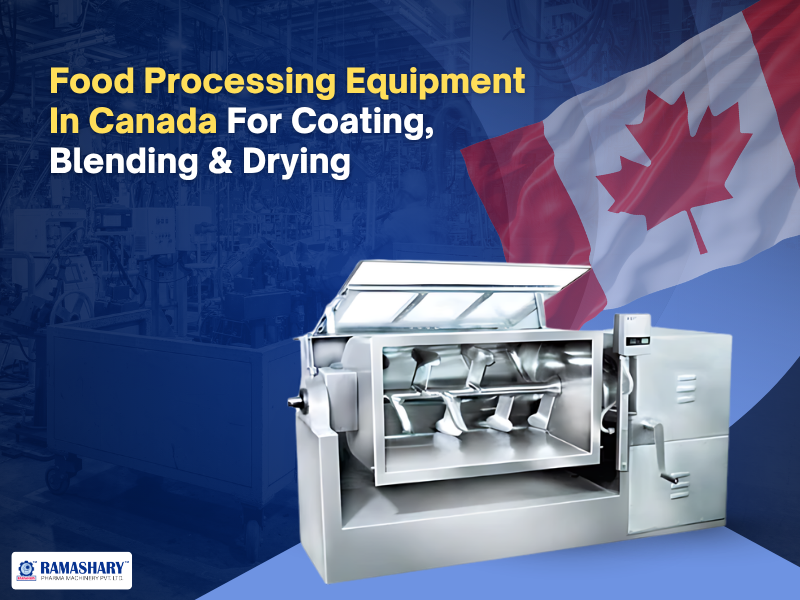
The Ribbon Blender, also known as a Ribbon Mixer, consists of a U-shaped horizontal channel, a gearbox, a double-layer ribbon for mixing and a double-helical ribbon agitator. The working principle follows a triple-action technique.

The ribbons are positioned to move material throughout the trough with no isolated zones, which gives a smooth, homogeneous end product and rapid discharge. We offer Ribbon Blender in Canada with capacities from 50 litres to 12,000 litres, so a small speciality processor and a large plant can both be served.
It handles dry powders and semi-solid materials. Real food products made with a Ribbon Blender in Canada include spice and seasoning blends, cake and bread mixes, flour blends, protein and drink premixes, dry soup mixes and dry seasoning for meat processing.
For anyone looking for a Ribbon Blender in Canada, this triple-action design is what provides batch-to-batch consistency.

2. Mass Mixer

The Mass Mixer offers convenient blending of wet and dry components and processes multiple batches in a short time. It consists of a fabricated motor, agitators, a control panel, a gearbox and a tilting device. Its closed structure avoids contamination, dusting and the entry of wear or corrosion particles into the drum.

It produces homogeneous mixtures of viscous and difficult substances. An interlocking mechanism prevents accidents, and easy unloading is achieved through the tilting device. In food plants, it is used for making juices, flour, creams and dough, spice blends and premixes and it supports meat processing lines by mixing seasonings and marinade bases uniformly.
Because it reduces manual handling, the Mass Mixer is a practical food processing equipment in Canada to handle challenges on the factory floor.

3. Tray Dryer

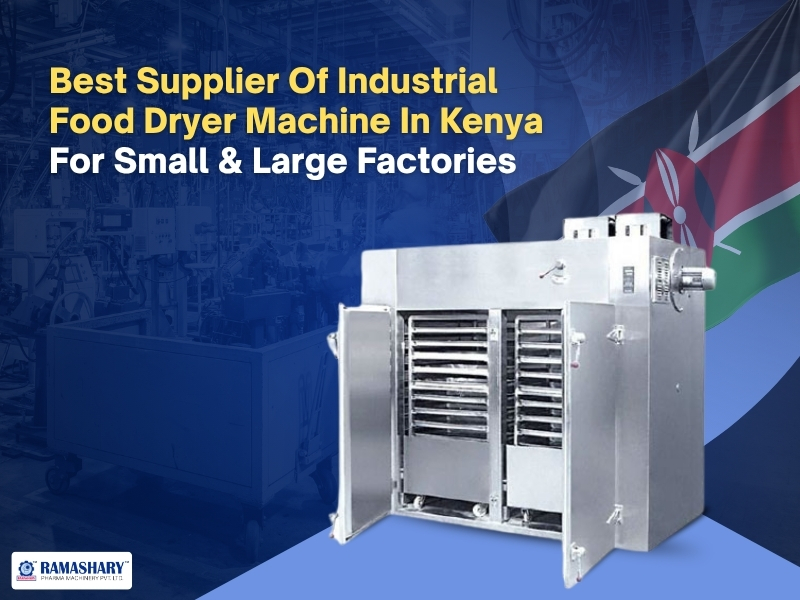
The Tray Dryer, or the food dehydrator machine Canada, is used to remove moisture from materials in batches through controlled heating. Operators spread the material evenly on trays, load the trays into the dryer, set the temperature and timer, then check moisture until the product is dry enough.

Heat-sensitive materials that can decompose or oxidise can be dried gently. The dryer handles herbs, granules and powders. It is easy to sanitise and clean to avoid cross-contamination between batches.
Real food products dried on a food dehydrator machine in Canada include dried fruits, dried vegetables, herbs, spices, tea leaves, nuts and dried or jerky-style meat products. For manufacturers looking for a food dehydrator machine in Canada, the easy-clean design is what protects food safety between runs.

4. Octagonal Blender

The Octagonal Blender is engineered for the efficient mixing of powders and granules. It operates with a slow tumbling action that gently mixes without high shear and its octagonal shape promotes optimal material flow and even blending while keeping energy use low.

It is well balanced even at higher capacities. This food equipment in Canada blends dry powders such as dairy powders, bakery premixes, drink powders and dry blends where gentle, uniform mixing matters. This gentle approach suits products that must hold quality without heavy processing.

5. Steam Heated Paste Kettle (Starch Paste Kettle)

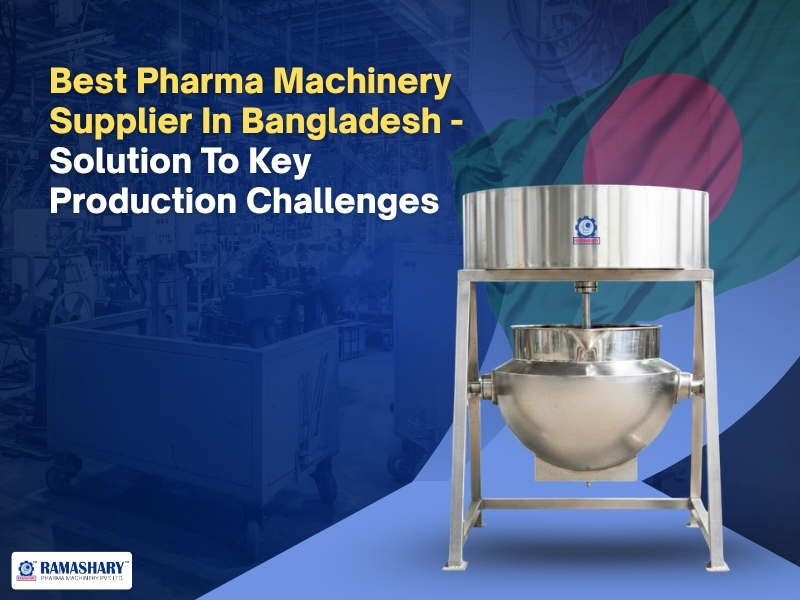
The Steam Heated Paste Kettle, also called the Starch Paste Kettle, heats and mixes food pastes and liquids. It works by passing steam through a jacket to heat the contents, while an agitator moves the material to prevent lumps. A tilting mechanism pours the finished paste out.

Ramashary Pharma Machinery Pvt. Ltd. offers capacities from 10 litres to 500 litres. The steam jacket provides uniform heating and operators control temperature to reach the perfect consistency. It handles semi-solid and sticky materials, so real food products include sauces, syrups, soups, tomato ketchup and confectionery, plus sauce and marinade bases used in meat processing.
When gentle, controlled heating protects flavour and nutrients, this food processing equipment in Canada earns its place on the line.

6. Conventional Coating Pan

The Conventional Coating Pan applies a consistent, uniform coating to the inner material while reducing cross-contamination. The rotating pan tumbles the product as coating liquid or powder is applied and controlled variable speed and uniform heating build even layers.

Its stainless steel construction ensures hygiene. In the confectionery and snacks industry, it coats products with sugar or chocolate, so real food products include coated nuts, candies, chocolates and coated snacks. For any food manufacturer making value-added coated products, this food equipment in Canada provides the uniformity that buyers expect.

7. V Blender

The V Blender is an industrial powder mixing machine designed for achieving uniform blending without excessive shear. Its V-shaped chamber rotates around a central axis, causing the material to repeatedly divide, tumble and recombine during operation. The design is suitable for applications where gentle and consistent mixing is important.

During operation, the ingredients are loaded into the V-shaped vessel through the charging port. As the chamber rotates, the powders move along different paths and continuously mix through tumbling and gravitational movement.
Depending on the formulation and process requirements, mixing aids can be incorporated to improve blending performance for certain materials. Once the required uniformity is achieved, the blended material is discharged through the outlet.
Such food processing equipment Canada is widely used for pharmaceutical formulations, food ingredients, nutraceuticals, chemicals and other dry powder applications. At Ramashary Pharma Machinery Pvt. Ltd., their capacity ranges from 10 L to 5,000 L according to the requirements. Their enclosed design helps minimise material exposure during processing while supporting consistent batch-to-batch mixing.

Is Your Drying Cycle Taking Longer Than It Should?

FAQs

1) Can you provide blending machines according to our existing batch sizes?

Yes, we can provide blending machines according to your existing batch sizes. For that, we first conduct space analysis, process analysis and understand your production requirements. The food processing equipment in Canada that we supply can also support future scalability requirements.

2) What if our ingredients have very different particle sizes?

We would first assess the physical characteristics of the ingredients and the possibility of segregation. Accordingly, required machines can be added to the production line with customisation to handle the existing particle sizes.

3) What machines do you provide for particle screening?

We supply customised Vibro Shifters that provide efficient screening as the number of decks and mesh sizes are added according to your production requirements. Particles of the required size come to the bottom and can be taken for further processing.

4) What if our product changes during the production cycle?

As a leading food machinery supplier in Canada, we provide machines with multi-product versatility and support different formulations. For that, we understand your production goals, products and more to make sure that the machines support the products you want to manufacture.

5) How do you help avoid manual handling between product transfers?

We provide Vacuum Transfer System that helps reduce manual handling between product transfers. Also, one machine can be integrated with another for direct transfer and to avoid human contact.

Conclusion

Canada’s food and beverage industry is the largest manufacturing sector in the country. Yet the sector is under real pressure. Volumes are shrinking even as revenue rises, labour is scarce, capital investment slipped in 2025 and recalls remain a constant threat.
From the food clusters of Toronto, Mississauga, Quebec and Brampton to the processing hubs of Montreal, Vancouver, Calgary and Winnipeg, the message is the same. Food manufacturers who want to compete need efficient, hygienic and reliable food processing equipment in Canada and they need a partner who will help them get more from every batch.
That is where Ramashary Pharma Machinery Pvt. Ltd. fits. We design, engineer and manufacture customised and CGMP-compliant machines for 20+ industries, including the food industry. Backed by site installation, spare parts, documentation, operator training and global export experience, we work as a long-term business growth partner, more than just a food machinery supplier in Canada.


Schedule a consultation with our team to put the right food equipment in Canada on your factory floor.

Home
Industries
Blogs
Call us
Whatsapp

Let’s Talk

Contact Form New

I am looking to

My business belongs to

My name is

I represent

Where I hold the position of

My number is

My email is

I am planning to purchase the machine

I heard about Ramashary from

I would like a free consultation

Schedule a Call Now

Schedule a call

Fill the Form to Download Company Profile

Company Profile

Fill the Form to Download Brochure

Download Brochure