

Even the top chemical companies face challenges when their machinery isn’t right.
Poland’s chemical sector is no longer a quiet supporting player in the country’s economy. It is one of the backbones of Polish manufacturing. Any company operating in this space knows that finding the right chemical machinery supplier in Poland is not a small procurement decision. It is a decision that determines batch consistency, regulatory compliance, plant uptime and ultimately, whether a factory can keep its promises to customers across the European Union.
From Warsaw’s corporate headquarters to the industrial belts of Plock, Pulawy, Tarnow and Brzeg Dolny, Polish chemical manufacturers are under constant pressure to improve their production lines while keeping costs under control.
The last few years have not been easy on this industry. Energy prices spiked across Europe, raw material costs shifted unpredictably and environmental regulation kept tightening. Yet through all of this, Poland has held its position as one of the larger chemical producers in the region.
Companies that specialise in consumer chemicals such as cosmetics, detergents and household products have actually grown steadily, even while bulk segments like fertilisers and basic chemicals struggled with high energy costs.
This split performance tells procurement heads and CEOs something important. Chemical machinery in Poland that is customised, energy-efficient, and capable of handling multiple product types is no longer a nice-to-have. It is the difference between a plant that survives a rough economic cycle and one that does not.
What Polish Manufacturers Are Searching For
Polish chemical companies export heavily into Germany, France and other EU markets, which means every batch has to satisfy regulatory requirements, GMP guidelines and increasingly strict environmental permits. A machine that cannot be validated, cleaned properly or documented for audit purposes becomes a liability rather than an asset.
This is exactly why customised and GMP-compliant chemical machinery in Poland is in demand among R&D managers and manufacturing directors across the country. They are not just buying equipment. They are buying predictability, traceability and the ability to pass an audit.
Sales managers and CEOs, meanwhile, are watching a market where infrastructure megaprojects and a recovering Eurozone are expected to push demand higher through 2026 and beyond. That growth will only translate into revenue if production capacity can keep up. Production capacity depends entirely on the chemical machinery in Poland on the factory floor.
An industrial blender in Plock that cannot scale, a Tray Dryer in Pulawy that overheats sensitive material or a liquid line that cannot be cleaned fast enough between batches will quietly cap a company’s growth no matter how strong its sales pipeline looks on paper.
Are You Facing Moisture Variations From Batch To Batch?
Overview Of Chemical Industry In Poland
Poland’s chemical industry has been formally recognised as one of the strategic branches of the country’s Industrial Policy. It is not an overstatement to say it underpins several other industries, since chemical inputs feed into everything from construction materials and automotive parts to food packaging and pharmaceuticals.
On the numbers side, Polish chemical sales were on a path to reach close to 19.2 billion euros by 2026, growing at roughly one and a half per cent per year from 2021 levels, with the market having grown at an average of around 2.9% annually over the previous decade.
That places Poland behind larger Western European chemical producers such as Switzerland, France, Italy and the Netherlands, but still firmly among the meaningful chemical manufacturing hubs of Europe.
What stands out is where the growth is coming from. Consumer chemicals, meaning cosmetics, detergents and household chemical products, made up about 22% of the sector’s production value in 2023, compared to only around 15% of the EU average. That is a clear specialisation. It explains why Poland has become something of a regional leader in chemical manufacturing.
Between 2019 and 2023, cosmetics production in Poland grew at roughly 14% per year, while household chemicals grew at about 10% annually. Compare that to bulk chemical segments such as fertilisers, which contracted by around 36% or basic chemicals, which fell by roughly 32% over the same period due to high energy costs.
This tells procurement heads something practical. If a factory is producing high-value, high-mix consumer or speciality chemical products, the market is rewarding that flexibility. Chemical processing equipment in Warsaw or any region bought today needs to be capable of handling multiple formulations, not just one bulk product line, because that is where the growth actually is.
Biotech Is Taking A Larger Role
Environmental compliance is also becoming a defining feature of the sector. The chemical industry accounted for more than 20% of all processing industry spending on green installations in 2024. It reflects how seriously Polish manufacturers are taking EU environmental regulation.
This is another reason a chemical machinery supplier in Poland must offer equipment that supports efficient material utilisation, dust control and energy-efficient drying, rather than legacy designs that leak, waste heat or generate excess waste.
Exports remain a major factor too, with Polish chemical products flowing steadily into Germany and other EU markets. Infrastructure megaprojects inside Poland are expected to increase domestic demand for paints, coatings and inorganic chemicals over the coming years.
For a company weighing whether to invest in new chemical machinery in Poland right now, the reason is reasonably encouraging. The companies that will capture that demand are the ones whose production lines are not the bottleneck when order books start filling up.
Importance Of Selecting The Right Chemical Machinery Supplier In Poland
Earlier, buying an industrial blender in Plock or a Tray Dryer in Pulawy was purely an operations-level decision, handled between a plant manager and a purchasing officer. That is changing fast in Poland’s chemical sector. Because so much of the country’s growth is concentrated in export-driven, higher-value segments, a CEO or R&D director now has a direct line of sight between the machinery on the factory floor and the company’s ability to win contracts in Germany, France or the Netherlands.
A production line that cannot demonstrate GMP-aligned validation or that cannot switch quickly between formulations is not just an operational headache anymore. It is a commercial constraint that shows up in lost tenders and stalled export negotiations.
This is one of the biggest reasons the search for a dependable chemical machinery supplier in Poland has moved up the priority list for so many companies. Sales managers need production capacity that can say yes to larger orders without a long lead time. R&D managers need machinery flexible enough to trial new formulations without changing an entire line.
All of these needs point to the same conclusion: selecting the chemical machinery supplier in Poland is no longer a back-office vendor relationship. It is a strategic partnership that shapes how fast, safely and profitably a business can grow inside one of Europe’s more promising chemical markets.
Do Your Current Machines Support An Increase In Production Volumes?
Chemical Industry In Poland's Key Cities
Poland’s chemical industry is not evenly spread across the country. It clusters around a handful of cities, each shaped by decades of industrial history, specific feedstocks and specialised production. Understanding these local conditions matters, because a chemical machinery supplier in Poland that only understands the overall demands will miss what is actually happening on individual factory floors in Warsaw, Plock, Pulawy, Tarnow and Brzeg Dolny.
1. Warsaw
Warsaw functions less as a manufacturing floor and more as the commercial and regulatory nerve centre of Poland’s chemical economy. Head offices, R&D divisions, procurement teams and compliance departments for many chemical groups are based in and around the capital, even when actual production happens elsewhere in the country.
It is a place where purchasing decisions for chemical processing equipment in Warsaw get made, budgets get approved and supplier shortlists get finalised. Warsaw-based teams are usually managing multi-site operations. They tend to prioritise suppliers who can standardise machinery specifications across several plants, provide consistent documentation for audits and support a wide range of product categories.
Any company searching for chemical processing equipment in Warsaw is typically not just buying one machine. They are often evaluating a supplier relationship that will scale across multiple facilities.
It is also worth noting that Warsaw hosts a growing cluster of chemical distribution, trading and formulation companies that do not necessarily run heavy industrial production on site. They still require pilot-scale and mid-scale chemical processing equipment for product development, quality testing and small-batch speciality runs.
For these companies, chemical processing equipment in Warsaw often means compact, flexible machinery that can move between different formulations quickly, rather than a single dedicated production line running one product around the clock.
2. Plock
Plock is home to the largest refining and petrochemical complex in Poland, with a processing capacity of roughly 16.3 million tonnes of crude oil per year and a Nelson Complexity Index of 9.5, among the highest in the region. This single site produces fuels, olefins, polyethene, polypropylene and a wide range of petrochemical derivatives that feed manufacturers across the country.
The scale of Plock’s operations means that even secondary and support processes, such as blending intermediate compounds, drying catalysts or handling speciality additives, require equipment that can operate reliably at industrial volumes.
This is why demand for a dependable dryer or industrial blender in Plock remains consistently strong among the smaller and mid-sized chemical manufacturers that sit in the supply chain around the Orlen complex, supporting everything from lubricant additives to polymer compounding operations.
For any of these smaller players, an industrial blender in Plock that can handle both routine additive mixing and occasional speciality batches offers the flexibility needed to serve a large, expanding industrial anchor client without overinvesting in single-purpose equipment.
3. Pulawy
Pulawy is the base of a company with more than fifty years of history in fertiliser and chemical manufacturing and a core part of Poland’s largest chemical and fertiliser group. The site produces fertilisers along with a range of chemical intermediates and its operations depend heavily on precise moisture control for granular and powdered materials before packaging or further processing.
Fertiliser components, agrochemical intermediates and related powders need consistent, batch-controlled drying to avoid caking, degradation or inconsistent particle quality before they move further down the production line. This is exactly the kind of environment where a reliable Tray Dryer in Pulawy becomes important
Beyond the flagship operations, Pulawy’s industrial base includes a number of smaller chemical and agrochemical formulators who depend on the same core process step, controlled moisture removal, before their materials can be packaged, blended further or shipped onward.
For these operators, a Tray Dryer in Pulawy that can be validated and documented for GMP-based quality assurance is often just as important as raw drying capacity, since export customers increasingly expect proof of consistent process control, not just a finished product that looks right on delivery.
4. Tarnow
Tarnow is the headquarters city of Poland’s largest fertiliser and chemical conglomerate and the second largest producer of nitrogen and compound fertilisers in the European Union. With a diverse product range coming out of one industrial base, powder handling becomes a daily operational challenge.
Dry powder homogenisation directly affects product consistency across fertiliser blends, plastics additives and pigment formulations. This is precisely why demand for a dependable Powder Mixer Blender in Tarnow stays high among both the larger integrated producers and the smaller speciality manufacturers operating nearby.
The surrounding industrial ecosystem includes numerous contract manufacturers and speciality chemical companies producing smaller, higher-margin batches alongside the group’s larger bulk operations. For these businesses, a Powder Mixer Blender in Tarnow needs to strike a careful balance between mixing power for larger fertiliser-adjacent runs and gentleness for more delicate pigment and additive powders.
5. Brzeg Dolny
Brzeg Dolny, a town in Lower Silesia near Wroclaw, is built around a single major chemical complex which manufactures surfactants, polyether polyols, alkoxylates and other speciality chemical products used in cleaning products, cosmetics and industrial applications.
The Legnica Special Economic Zone has continued to attract fresh investment into the site, including a new alkoxylate production plant valued at approximately PLN 351 million, expected to create a minimum of 50 new jobs and reach completion around 2026.
Because their chemical output feeds directly into liquid-based consumer and industrial formulations such as surfactant blends, liquid detergents and cosmetic bases, there is a clear and growing need for a well-engineered Liquid Manufacturing Plant in Brzeg Dolny capable of precise mixing, temperature control and batch consistency for these liquid formulations.
With new production capacity coming online in the local chemical industrial park and the Legnica Special Economic Zone continuing to draw fresh investment, demand for an advanced, GMP-compliant Liquid Manufacturing Plant in Brzeg Dolny is only likely to increase.
Companies operating in or supplying into this cluster need liquid processing equipment that can be validated for export-grade quality control, since much of the surfactant and speciality chemical output from this region is destined for customers across the wider European Union rather than the domestic Polish market alone.
Best Pharma Machinery Supplier In Switzerland
Behind every industry statistic is a plant manager trying to hit a production target, a QA officer trying to pass an audit and a procurement head trying to justify a capital expense. These are the real, everyday problems that keep coming up across Polish chemical facilities and they explain exactly why choosing the right chemical machinery supplier in Poland matters so much.
1. Rising Energy Costs
High energy costs have already caused measurable damage in Poland’s bulk chemical segments, with basic chemicals output falling by around 32% and fertiliser output by around 36% over a recent multi-year period, largely because these processes are energy intensive.
Drying, heating and mixing operations are some of the biggest energy consumers on a chemical factory floor. When machinery is old, poorly insulated or inefficient in its heat transfer design, every degree of temperature and every extra hour of drying time adds directly to the electricity or steam bill. Plants that have not bought energy-efficient chemical machinery in Poland are effectively paying a hidden tax on every batch they run.
2. Meeting Compliance
Polish chemical exporters send a significant share of their output into Germany and other EU markets, which means every product has to satisfy registration requirements and, in many segments, GMP-equivalent quality standards. The chemical sector has responded by directing more than 20% of its processing investment toward green and compliant installations in 2024 alone.
For QA teams, the challenge is not just producing a compliant product once. It is proving, through documentation, validation records and traceable equipment design, that every single batch meets the same standard, year after year, audit after audit.
3. Handling Sensitive & Hazardous Materials Safely
Many Polish chemical facilities, particularly those producing speciality chemicals, agrochemical intermediates and pharmaceutical compounds, work with materials that are heat-sensitive, oxidation-prone or genuinely hazardous if mishandled.
Traditional open drying and blending equipment exposes operators to dust, fumes and temperature risks and it also risks degrading the material it is processing. Facilities need to partner with a chemical machinery supplier in Poland that provides equipment engineered specifically for controlled processing rather than adapted general-purpose machinery.
4. Inconsistent Batch Quality
Older blending and drying machinery, especially equipment that has been in continuous service for a decade or more, tends to develop uneven mixing patterns, temperature gradients and wear-related inconsistencies. For a manufacturing director, this shows up as batch-to-batch variation that quality control keeps flagging, customer complaints about product consistency and rework that eats into margins.
5. Dust Generation & Workplace Safety Risks
Dry powder handling, whether it is fertiliser granules in Pulawy, pigment powders in Tarnow or speciality additive powders anywhere else in the country, generates fine dust during loading, mixing and transfer. Dust is not just a housekeeping issue. It represents a genuine occupational health hazard and, in certain concentrations, an explosion risk.
Facilities relying on manual loading and open transfer methods are exposed on both fronts and regulators across the EU have been tightening workplace exposure limits for particulate matter. Thus, selecting a chemical machinery supplier in Poland is important.
6. Slow Changeover Times Between Product Batches
Because so much of Poland’s chemical growth is happening in flexible, higher-mix segments like cosmetics and household chemicals rather than single-product bulk lines, manufacturers are running more product changeovers than ever before.
Chemical processing equipment in Warsaw or any other region that is difficult to clean, has hard-to-reach internal surfaces or lacks quick-release components turns every changeover into lost production time. Multiply that lost time across dozens of changeovers a month and it becomes a serious drag on overall plant output.
7. Skilled Operator Shortages & Training Gaps
Complex, poorly documented machinery requires experienced operators to run safely and efficiently. But, Poland’s manufacturing sector, like much of Europe, is dealing with a tightening skilled labour market. When equipment is not customised, when control panels are not standardised and when there is no proper training or support from the supplier, plants end up with longer downtime.
Taken individually, each of these seven challenges might feel manageable with a workaround here or an extra maintenance shift there. Taken together across an entire production site, they add up to real, measurable losses in throughput, compliance readiness and worker safety.
This is the honest reality behind almost every conversation happening today between a manufacturing director and a chemical machinery supplier in Poland. The question is rarely “do we need new equipment.” It is almost always “which supplier can actually solve more than one of these problems at once, with documentation we can trust.”
None of these seven challenges exists in isolation. A plant struggling with energy costs is often also struggling with slow changeovers, because inefficient equipment tends to be inefficient across the board, not just on one metric.
A facility handling hazardous materials without proper equipment is also more exposed to compliance risk, because manual handling processes are harder to document and validate for GMP purposes. This is exactly why so many procurement heads eventually stop trying to solve these problems one machine at a time and instead start looking for a single, capable chemical machinery supplier in Poland that can address multiple challenges through one coordinated equipment upgrade.
Don’t Let Long Cleaning Cycles Affect Your Production Time
How to Choose the Right Chemical Machinery Supplier In Poland
Given everything covered so far, it helps to lay out exactly what procurement heads, QA managers and R&D directors should be checking before signing off on a machinery purchase. This is the practical checklist that separates a good long-term decision from an expensive mistake.
a] Certification First, Brochure Second
A chemical machinery supplier in Poland should be able to show ISO certification and, where relevant to the product category, GMP compliance, not just claim it in marketing copy. Ask for documentation, not just assurances. A supplier that hesitates to share validation protocols or quality certificates is telling you something important before you have even placed an order.
b] Customisation Capability, Not A Fixed Catalogue
Polish chemical manufacturers are increasingly running higher-mix production, which means off-the-shelf chemical machinery in Poland sized for someone else’s batch volumes rarely fits well. Look for a supplier willing to adjust capacity, materials of construction, automation level and cleaning systems to your actual production needs, whether that is a five-hundred-litre pilot batch or a twelve-thousand-litre industrial run.
c] Track Record Across Comparable Industries
A chemical machinery supplier in Poland that has only ever built machinery for one narrow application may struggle when your process introduces sensitive materials, hazardous handling requirements or unusual viscosity profiles. Suppliers with decades of experience across pharma, food, cosmetic and chemical sectors, with hundreds of documented site installations, bring pattern recognition that a newer or narrower vendor simply cannot match.
d] End-To-End Support
Site installation, operator training, after-sales support and spare parts availability matter just as much as the machine’s specification sheet. A dryer or blender that breaks down six months in, with no responsive support line, becomes a liability regardless of how well it was built on day one.
e] Experience Relevant To Your Market
There is a need for a chemical machinery supplier in Poland that already ships equipment internationally, including to European markets with their own regulatory expectations, understands the documentation, shipping logistics and compliance that a purely domestic supplier might not.
Best Chemical Machinery Supplier In Poland
Ramashary Pharma Machinery Pvt. Ltd. is an ISO and GMP-certified company, which means the company’s internal processes, from design through fabrication to final testing, follow documented, auditable procedures.
For a procurement head or QA manager evaluating a chemical machinery supplier in Poland from overseas, this distinction is not a minor detail. It is the difference between equipment that can be dropped straight into a regulated production environment and equipment that will require months of additional validation work, custom documentation and potential rework before it can even be used in a compliant facility.
With 40+ years of experience, 700+ site installations and expertise across 20+ industries, every machine is built with the understanding that a Polish customer exporting into the EU cannot afford equipment that raises questions during a customer audit or a regulatory inspection.
1. Energy-Efficient Machines
We engineer our drying equipment, including the Roto Cone Vacuum Dryer and Tray Dryer, to work with energy efficiency while still achieving thorough moisture removal. The Roto Cone Vacuum Dryer in particular uses a vacuum environment to pull moisture out at reduced temperatures, meaning less energy is needed to reach the same drying result compared to open-air, high-heat drying methods.
This directly reduces the energy burden that has hit Polish chemical companies, especially those running fertiliser and basic chemical intermediates in Pulawy and Tarnow.
2. International & Environmental Compliance
We supply chemical processing equipment in Warsaw, Plock, Pulawy and all across Poland, manufactured according to recognised compliance standards and provide end-to-end documentation for quality assurance and audit readiness. We follow ASME BPE, SCADA, 21 CFR, CE, WHO-cGMP, GMP, ISO 9001:2015 and Industry 4.0 standards and international validation protocols.
This matters enormously for procurement heads and QA managers who are sourcing chemical processing equipment in Warsaw for multi-site operations that must satisfy both Polish authorities and EU-wide regulatory bodies. Every machine, from blenders to liquid manufacturing plants, is built with validation and documentation support in mind, not added as an afterthought.
3. Handling Sensitive & Hazardous Materials
The machines are specifically designed for materials that are too sensitive to withstand oxidation or high temperatures, maintaining uniform heat transfer through a jacketed vessel heated by steam or hot water while removing moisture under vacuum.
Combined with the Vacuum Transfer System, which moves dry material through enclosed pipes instead of manual handling, gives chemical manufacturers a way to handle volatile and hazardous powders with far less operator exposure.
4. Support For Batch Consistency
Our 20+ dedicated machines are engineered specifically to eliminate dead zones and isolated pockets of unmixed material. The Ribbon Blender uses a triple-action mixing technique that combines fast, medium and slow mixing speeds within a single U-shaped trough, while the Octagonal Blender uses internal baffles to boost mixing performance and reduce dead zones.
For a chemical machinery supplier in Poland serving manufacturers who are shifting toward higher-value, higher-mix consumer chemical production, this level of mixing consistency is exactly what protects product quality from batch to batch.
5. Operator Safety & Ease Of Use
The Vacuum Transfer System moves granules, powdered chemicals, pellets and flakes through sealed pipe networks rather than open transfer, which prevents dust from escaping into the workplace and reduces the risk of material loss or contamination. This is a direct answer to the dust and safety concerns facing powder-heavy operations around Tarnow and Pulawy, where fertiliser and pigment powders are handled daily.
6. Fast Changeover Times
We design our blending and drying machinery with CIP/SIP systems. These machines support multi-product versatility and formulation changes. Faster, more reliable cleaning cycles translate directly into more production hours, which matters for facilities running multiple product lines through the same equipment.
7. Operator Training & Manuals
Our machines are manufactured with a focus on ease of use. Also, we provide site installation, operator training, commissioning and detailed instruction and maintenance manuals. Our ongoing after-sales service and assured spare parts further help reduce downtime.
This reduces the learning curve for new operators and shortens the ramp-up period whenever staff turnover happens, which is an increasingly common reality across Poland’s manufacturing labour market.
Best Chemical Processing Machines In Poland
We provide dedicated and customised chemical industry machinery in Poland according to the exact requirements of the chemical manufacturers. These are designed, engineered and manufactured after a detailed space analysis, process analysis and understanding of the company’s production goals.
1. Ribbon Blender
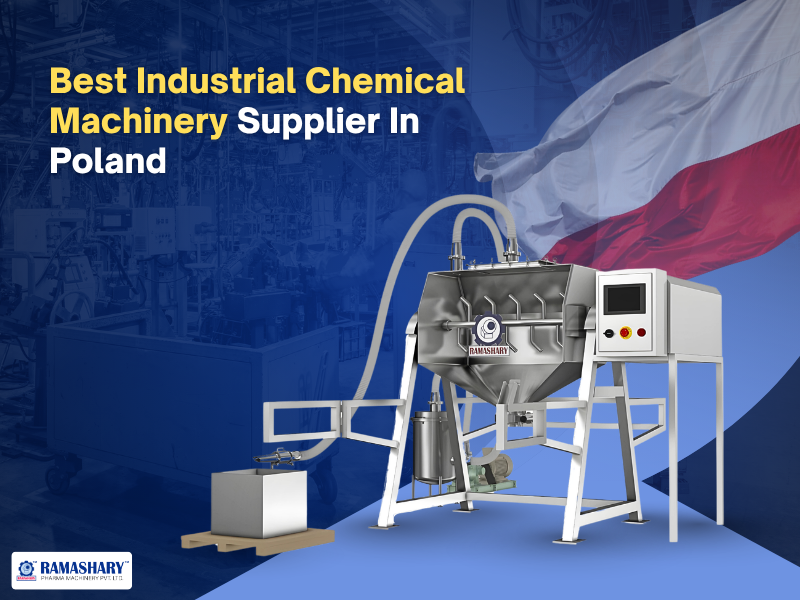
The Ribbon Blender is one of the most requested machines whenever a Polish manufacturer searches for an industrial blender in Plock, since it is built to handle large volumes of dry chemical powders efficiently. The machine consists of a U-shaped horizontal channel, a double-layer ribbon for mixing, a double-helical ribbon agitator and a transmission system.
Its working principle follows a triple-action technique, where a homogeniser provides faster mixing speed, a propeller offers medium speed and an anchor stirrer delivers slower speed, all working together inside the same trough.
The ribbon itself is positioned so that material never sits in an isolated, unmixed pocket, and the design allows for rapid product discharge once mixing is complete. Ramashary Pharma Machinery Pvt. Ltd. builds this machine for use across pharma, food, chemical, fertiliser and animal feed industries and it is commonly used to blend dry chemical powders, fertiliser granule components, detergent bases and pigment mixtures.
Around the Plock petrochemical belt, where support processors handle intermediate compounds and speciality additives, this kind of dependable industrial blender in Plock helps keep secondary processing consistent even when volumes fluctuate.
Procurement teams evaluating an industrial blender in Plock should also confirm the blender’s capacity range matches both current and projected future volumes, since undersized equipment is one of the most common and costly mistakes in this category.
2. Octagonal Blender
The Octagonal Blender is an answer to gentle, low-shear powder mixing and it is frequently searched for as a powder mixer blender in Tarnow, where fertiliser blends, plastics additives and pigment powders all demand careful, consistent mixing without damaging delicate particle structures.
The machine works by tumbling a mixing bin around its own axis, driven by an electrical motor connected through a reduction gearbox that lowers input speed while increasing output torque. Internal baffles guide the material into a controlled flow pattern, which promotes mixing efficiency, reduces dead zones and improves overall blend consistency.
Real-world applications include lubrication of tablet granules, mixing dry chemical powders and blending detergent and cleaning product formulations. The machine is used across pharmaceutical, food, chemical, cosmetics, nutraceutical, detergent and construction material industries.
For a facility in Tarnow handling multiple fertiliser and speciality chemical formulations on the same production floor, a properly specified powder mixer blender in Tarnow like this one keeps every batch within a tight quality tolerance.
Businesses looking for a powder mixer blender in Tarnow or any region should pay close attention to baffle design and rotation speed control, since these two factors determine whether fragile granules survive the mixing process intact.
3. Tray Dryer
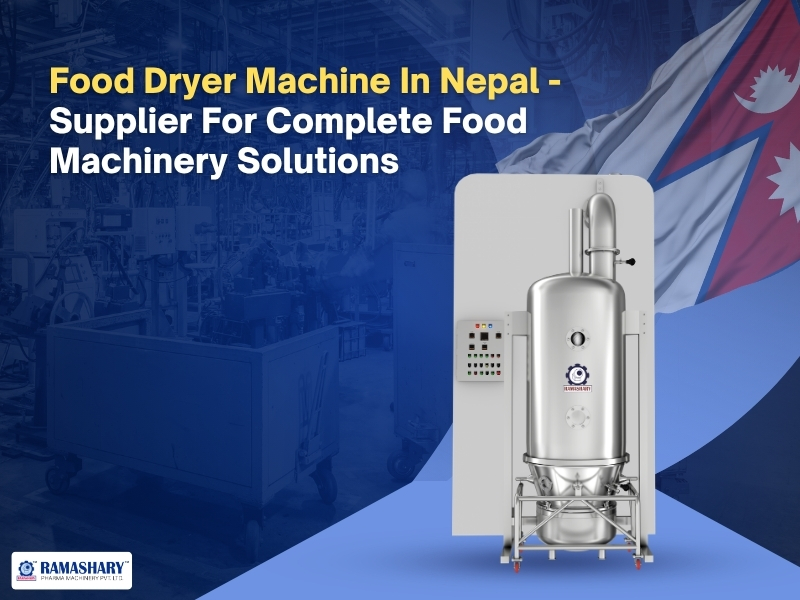
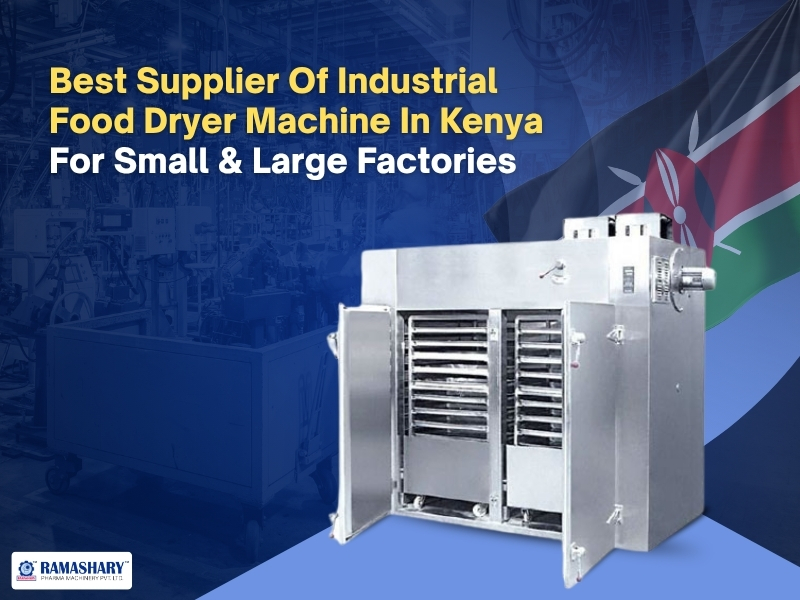
The Tray Dryer removes moisture from materials in controlled batches and it is a consistently requested equipment whenever a company searches for a Tray Dryer in Pulawy or other regions in Poland, depending on the volume of fertiliser and agrochemical material to be dried.
Operators spread the material evenly across trays, load the trays into the drying chamber and set the temperature and timer according to the specific requirements of the material being processed. Moisture levels are checked periodically, either by comparing pre-drying and post-drying weight or by using a moisture metre and the material is unloaded once it reaches the target dryness.
The presence of inert gas options allows various materials to dry quickly at lower temperatures, which is particularly useful for heat-sensitive chemical powders and resins that could degrade under excessive heat. We engineer these dryers to be easy to sanitise, sterilise and clean between batches, avoiding contamination of the next material processed.
Real-world use cases include drying resins, pigments and chemical powders in the chemical industry, along with herbal extracts, wet granules and powders in pharmaceutical applications. For fertiliser and chemical intermediate manufacturers, a properly designed Tray Dryer in Pulawy or any region is often the deciding factor between granules that flow and pack correctly and material that clumps or degrades before it ever reaches packaging.
When comparing options for a Tray Dryer in Pulawy, it is worth checking batch capacity, temperature uniformity across trays and how easily the drying chamber can be cleaned between different product runs.
4. Liquid Manufacturing Plant
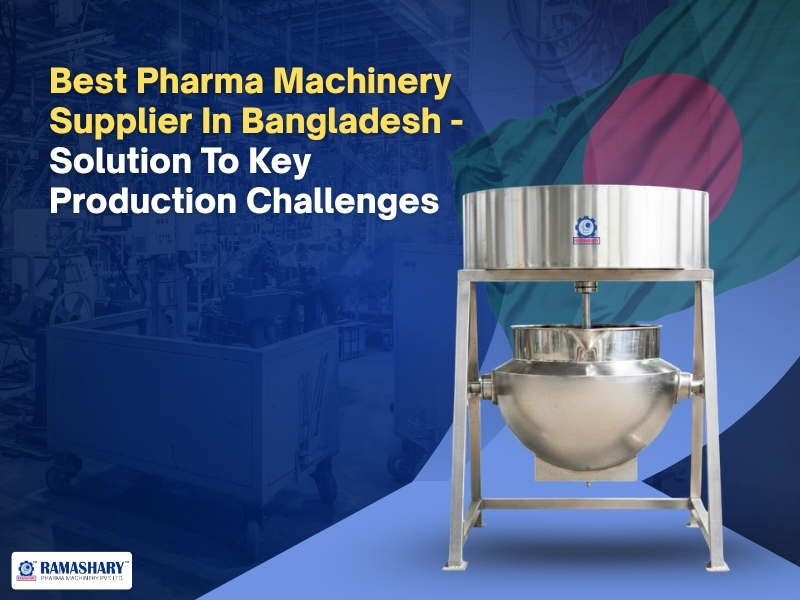
The Liquid Manufacturing Plant is the solution for consistent, scalable liquid processing and it is a natural fit for facilities searching for a Liquid Manufacturing Plant in Brzeg Dolny, where surfactants, alkoxylates and liquid formulation chemistry dominate the local industrial base.
The manufacturing vessel is charged with the required liquid base. Ingredients are then added according to the formulation procedure. Soluble components can be added and mixed until they dissolve. Agitation keeps the contents moving and helps distribute the ingredients throughout the batch.
The plant can be customised for batch size, viscosity, temperature sensitivity and cleaning requirements and it includes precise temperature and handling controls so that sensitive ingredients are processed without compromising stability or efficacy.
As an ISO and GMP-certified company, Ramashary Pharma Machinery Pvt. Ltd. ensures the plant complies with international regulatory standards suitable for export-oriented Polish producers.
Any company sourcing a Liquid Manufacturing Plant in Brzeg Dolny or any region should confirm the vessel’s material of construction is compatible with the requirements.
5. Roto Cone Vacuum Dryer
The Roto Cone Vacuum Dryer is built for materials that are too sensitive to withstand oxidation or high heat. It is an ideal chemical processing equipment in Warsaw and associated regions. A vacuum system pulls moisture out of the internal atmosphere at a reduced temperature, meaning the material never has to be exposed to the aggressive heat levels that open-air drying methods require.
Rotation of the cone-shaped vessel, combined with internal lump breakers, ensures the final material comes out dry and free of clumps, even when the input material is crystalline or irregularly shaped. Because the design has only one moving part that can be tightly sealed, cross-contamination risk between batches is minimised.
Real-world applications include drying volatile intermediates, hazardous powders and heat-sensitive active ingredients across the chemical and pharmaceutical sectors. This makes it a strong fit for speciality and fine chemical producers who need dependable chemical processing equipment.
Teams shortlist such chemical processing equipment in Warsaw or any other region when specifying equipment for plants handling genuinely delicate materials.
6. Filter Press
The Filter Press separates liquids from solids under pressure, functioning much like a large-scale press that squeezes suspended solids out of a liquid slurry so both the filtrate and the filter cake can move on to their next processing stage.
This is an important step for chemical companies who need to recover solid material from a liquid mixture, or conversely, need to purify a liquid stream by removing suspended particulates before further formulation.
Real-world chemical applications include separating precipitated solids from reaction mixtures, clarifying liquid chemical products before packaging and recovering valuable solid by-products from processing waste streams, all of which are common steps for chemical manufacturers operating in Poland’s chemical industry.
Taken together, these machines are not meant to be evaluated in isolation. A chemical facility searching for a Powder Mixer Blender in Tarnow might pair the Octagonal Blender with the Vacuum Transfer System so that powder mixing and dust-free material movement happen as one connected workflow.
A facility searching for a Liquid Manufacturing Plant in Brzeg Dolny might run the Liquid Manufacturing Plant alongside the Filter Press to handle both formulation and downstream purification of a surfactant product.
This is the real value a single, integrated chemical machinery supplier in Poland brings to the table: equipment that is designed to work together, backed by one point of contact for installation, validation documentation and after-sales support, rather than a patchwork of machines sourced from five different vendors with five different service standards.
Produce More With Better Quality Without Wasting Time
FAQs
1) Is it worth importing chemical machinery from India to Poland, or should I buy locally?
It depends entirely on the supplier’s certification, customisation ability and export track record rather than the country of manufacture itself. An ISO and GMP-certified chemical machinery supplier in Poland that already exports to other regulated markets, such as Ramashary Pharma Machinery Pvt. Ltd., typically brings the same compliance standards.
2) What is the typical capacity range for an industrial blender used in chemical processing?
Capacity varies widely by application. But blenders like the Ribbon Blender typically range from 50 L for smaller speciality batches up to 12,000 L for industrial-scale production, while gentler blenders like the Octagonal Blender range from around 05 L up to 12,500 L.
3) Can you supply a liquid manufacturing plant for surfactant and detergent production?
Yes, Ramashary Pharma Machinery Pvt. Ltd.’s Liquid Manufacturing Plant is engineered with a mixing and homogenisation system suitable for liquid detergents and cosmetic base liquids. It can be customised for batch size, viscosity and cleaning requirements relevant to liquid chemical formulation.
4) Do you provide test reports with the machines?
Yes, as an experienced chemical machinery supplier in Poland, we provide IQ, OQ, DQ and FAT reports and MOC certificates. Overall, we provide end-to-end documentation that simplifies compliance for chemical manufacturing companies.
5) Can these machines be customised for the paint industry?
Yes, these machines can be customised for the paint industry as well as allied industries. The machines can be customised for the production volume, formulation, level of automation, etc.
Conclusion
Whether the starting point was a general search for chemical machinery in Poland or a specific need for chemical processing equipment in any industrial hub, the underlying decision is the same one. It comes down to finding a chemical machinery supplier in Poland that treats compliance, customisation and after-sales support as non-negotiable, not optional extras layered on top of a basic machine.
Bulk segments like fertilisers and basic chemicals have taken a real hit from energy costs, while consumer-facing segments like cosmetics and household chemicals continue growing at a healthy pace, backed by strong export demand into Germany and the rest of the EU.
This is exactly where partnering with the right chemical machinery supplier in Poland makes the difference between staying stuck with these problems and actually solving them. Ramashary Pharma Machinery Pvt. Ltd. brings more 40+ years of manufacturing experience, ISO and GMP certification and a genuinely end-to-end approach that covers consultation, customisation, manufacturing, site installation and ongoing support.
Connect with us and let’s find out the right manufacturing solution for your facility.