

The Most Expensive Machinery Decision May Be Choosing the Wrong Equipment.
Argentina has a strong agricultural foundation and an established food and beverage manufacturing industry. From dairy products and processed meat to fruit concentrates, packaged beverages, grain-based ingredients and wine production, the country supports a diverse range of food processing operations.
For manufacturers looking for a reliable food machinery supplier in Argentina, the opportunity lies not just in increasing production volumes but in improving how efficiently agricultural resources are converted into consistent, market-ready products. This requires machinery engineered around actual processing conditions, raw material characteristics and the quality expectations of the finished product.
The importance of this industry is reflected in its contribution to Argentina’s manufacturing economy. Reportedly, food, beverage and tobacco accounted for approximately 29% of manufacturing sector value added in 2024. The country’s food and beverage industry also supports a substantial network of agricultural producers, ingredient manufacturers, processing facilities, packaging companies and exporters.
For industrial buyers, selecting suitable food processing machinery in Argentina is therefore an important part of maintaining production efficiency and strengthening manufacturing capabilities.
Industry Overview - Argentina's Food & Beverage Manufacturing Sector
Argentina's Position In The Global Food Processing Industry
Argentina is an important agricultural and food-producing economy with established capabilities in the production and processing of cereals, oilseeds, meat, dairy products, fruits and beverages. Its food manufacturing ecosystem extends from primary agricultural processing to the production of value-added ingredients and finished consumer products.
Several major manufacturing segments are:
- Beef processing
- Poultry processing
- Pork, cold cuts and sausage manufacturing
- Dairy product manufacturing
- Oilseed crushing
- Cereal milling
- Biscuits, bakery products and pasta
- Sugar, confectionery and chocolate
- Wine production
- Soft drinks, water, soda, beer, juices and alcoholic beverages
- Yerba mate, tea and coffee processing
For this reason, the selection of food processing machinery in Argentina should be based on the manufacturing operation and the characteristics of the material being handled.
What The Industry Statistics Tell Food Manufacturers
Argentina’s food and beverage industry is not a single manufacturing category. It consists of interconnected production activities that depend on agricultural inputs, industrial processing, quality control and distribution.
Reportedly, micro and small enterprises make up a substantial proportion of the sector’s business base. A food machinery supplier in Argentina must therefore understand that machinery requirements differ considerably between a small batch-processing facility and a large industrial production plant.
Major Food & Beverage Processing Segments In Argentina
1. Fruit and vegetable processing
Argentina has a diverse fruit and vegetable production base. Important agricultural products include lemons, grapes, apples, pears and other regionally cultivated produce.
These raw materials support several downstream manufacturing activities, including:
- Fruit pulp and puree production
- Juice and concentrate manufacturing
- Fruit-based beverage preparation
- Processed vegetable products
- Fruit-derived food ingredients
A juice manufacturing facility must consider the complete processing sequence. Depending on the final product, this may involve raw material preparation, extraction, filtration, formulation, liquid mixing and thermal treatment.
For manufacturers planning to increase beverage output, equipment capacity must be aligned with the required production volume and the characteristics of the formulation.
A company evaluating a juice manufacturing machinery supplier in Argentina should therefore examine the actual processing requirements before selecting individual machines. Equipment intended for liquid mixing, for example, should be assessed for viscosity, batch volume, agitation requirements and cleaning arrangements.
2. Dairy and milk-based food processing
Argentina has an established dairy manufacturing industry supported by milk-producing regions and downstream processing facilities. The sector includes the production of milk, cheese, butter, milk powder and other dairy-based ingredients.
Depending on the final product, dairy manufacturing may involve:
- Ingredient preparation
- Liquid mixing and blending
- Heating and temperature management
- Concentration and drying
- Powder handling and formulation
The machinery requirements of a milk powder manufacturer differ significantly from those of a liquid dairy beverage producer. Powder manufacturing requires suitable drying and downstream powder-handling equipment, while liquid processing requires appropriate vessels, agitation and temperature control.
For procurement teams, the critical consideration is whether the proposed machinery is engineered for the specific dairy application and its associated hygiene requirements.
3. Grain and flour-based food manufacturing
Argentina is a major producer of wheat, maize and oilseeds. These agricultural commodities support flour milling, bakery manufacturing, cereal processing and the production of various food ingredients.
Manufacturers working with powdered and granular ingredients often require consistent blending before subsequent processing or packaging.
This is where selecting an appropriate industrial blender becomes important. A ribbon blender supplier in Argentina should be evaluated on the suitability of the mixing mechanism, product characteristics, batch capacity and required level of uniformity.
4. Meat and processed food manufacturing
Argentina’s meat processing industry is an important part of its food production and export ecosystem. Beef production is particularly prominent, while poultry and pork processing also contribute to the wider sector.
Manufacturing operations in this category may involve meat preparation, cutting, formulation, seasoning, processing and packaging.
Equipment selection must account for the specific operation. Machinery designed for dry ingredient blending cannot automatically be considered suitable for direct meat processing. Product-contact materials, hygienic design, cleaning procedures and the relevant food safety requirements must be evaluated separately.
For this reason, procurement teams should specify the intended application clearly when approaching a food machinery supplier.
5. Beverage and liquid food manufacturing
Argentina has a diverse beverage manufacturing sector covering wine, fruit juices, soft drinks, bottled water, beer and other beverages. Each product has its own formulation and manufacturing requirements.
For example, fruit-based beverages may require the preparation and blending of fruit-derived ingredients with water and other formulation components. Syrup production may involve dissolving sugar or other soluble ingredients under controlled conditions before further processing.
A company planning a syrup manufacturing plant in Argentina should evaluate:
- Required batch capacity
- Ingredient solubility
- Mixing intensity
- Heating requirements
- Product viscosity
- Material-contact construction
- Cleaning and changeover requirements
These factors determine the type of processing vessel and mixing arrangement required.
Why Food Manufacturers Need Better-Engineered Processing Machinery
As manufacturing operations become more demanding, equipment selection becomes directly connected to production planning, product consistency and operating economics.
Consider a manufacturer producing two different powdered food formulations. The first formulation contains relatively free-flowing ingredients, while the second includes components with different particle sizes and bulk densities. Using the same mixing conditions for both products may not deliver the required uniformity.
Similarly, a beverage manufacturer increasing its batch size may discover that its existing mixing equipment cannot maintain the same processing conditions at the higher volume.
These are not simply machinery problems. They are engineering and production-planning challenges that must be addressed before equipment procurement.
Manufacturers should evaluate the following factors when selecting industrial beverage and food processing machinery in Argentina:
- Product characteristics: Understand the physical and chemical properties of the raw materials.
- Batch capacity: Match the equipment’s usable working volume to the actual production requirement.
- Mixing performance: Assess whether the machine can achieve the required level of product uniformity.
- Temperature management: Determine whether controlled heating or cooling is required.
- Material compatibility: Verify that product-contact materials are appropriate for the intended application.
- Cleaning requirements: Evaluate equipment accessibility and the cleaning procedure between batches.
- Maintenance requirements: Consider the availability of service support, spare parts and maintenance documentation.
- Future production requirements: Assess whether the machinery can accommodate planned changes in production volumes or formulations.
The right machinery is not necessarily the machine with the highest advertised capacity. It is the machine that can perform the required operation consistently under the manufacturer’s actual production conditions.
For procurement heads and plant managers, the objective should be to establish a clear connection between equipment specifications and production expectations before making a purchasing decision. That’s where selecting the right beverage and food machinery supplier in Argentina matters.
Common Myths In Food & Beverage Processing
A strong agricultural supply base does not automatically translate into efficient manufacturing. Food and beverage companies must manage several technical requirements once raw materials enter the factory. Fruit-based beverage manufacturers need to achieve consistent liquid formulations. Powdered food ingredient producers require uniform blending. Dairy and other liquid food processors must maintain suitable operating temperatures and hygienic handling conditions.
Manufacturers producing concentrated beverages or syrups must also consider ingredient dissolution, heating and mixing performance. A mismatch between equipment design and the intended process can lead to inconsistent batches, unnecessary material losses and production interruptions. These requirements make the selection of a technically suitable food machinery supplier in Argentina more important than simply comparing equipment prices.
Another important consideration is the relationship between machinery design and food safety. Equipment intended for food production must be assessed for product-contact material suitability, surface finish, cleaning accessibility, drainage requirements and compatibility with the ingredients being processed.
Depending on the application, manufacturers may require stainless steel contact parts, controlled mixing arrangements, suitable heating systems and hygienic equipment construction. GMP-oriented engineering practices can help establish repeatable and controlled manufacturing operations.
These questions influence equipment selection, operating costs and future production flexibility. Whether a manufacturer needs a juice manufacturing machinery supplier in Argentina, a syrup manufacturing plant in Argentina or a suitable industrial blender, the objective should be to identify machinery that supports the actual production requirement.
Planning To Expand Beverage Production?
Factory-Floor Challenges Faced By Argentina's Food & Beverage Manufacturers
Food and beverage manufacturing requires more than an adequate supply of agricultural raw materials and a functioning production facility. Every manufacturing operation must coordinate equipment performance, material characteristics, processing conditions, quality control, maintenance and production planning.
A production manager may be dealing with inconsistent batches. A maintenance head may be concerned about frequent equipment interruptions. A procurement manager may be trying to balance machinery investment against production requirements.
Although these problems may appear different, they often have a common underlying issue: the machinery and production process are not adequately aligned.
Challenge 1: Maintaining Consistent Product Quality Across Every Batch
Product consistency is one of the most important requirements in food and beverage manufacturing. Customers expect a product to maintain its intended characteristics regardless of the production batch. Manufacturers must therefore ensure that ingredient proportions, mixing conditions and processing parameters remain sufficiently controlled.
However, maintaining consistency can become difficult when a facility uses unsuitable equipment or relies on processing arrangements that do not adequately account for material characteristics.
Consider a manufacturer producing powdered food ingredients using flour, starch, seasoning and other dry components. If the ingredients have different particle sizes, bulk densities or flow characteristics, achieving uniform distribution may require careful selection of the mixing mechanism and operating conditions.
Similarly, a beverage manufacturer producing fruit-based formulations must maintain the required ingredient distribution and processing conditions throughout the batch.
Common factory-floor problems include:
- Uneven distribution of ingredients
- Variation in product texture
- Inconsistent batch characteristics
- Material accumulation inside processing equipment
- Repeated adjustments to mixing conditions
- Increased quality inspection and reprocessing requirements
For manufacturers, these problems can affect production planning and material utilisation.
What should manufacturers evaluate?
Before purchasing new machinery, production teams should establish:
- The physical properties of the ingredients
- Required batch size
- Desired mixing uniformity
- Suitable mixing mechanism
- Operating speed and processing time
- Discharge performance
- Cleaning and inspection accessibility
For dry food ingredient manufacturers, a suitable blending machine can support consistent ingredient distribution when properly selected and operated.
Companies looking for a ribbon blender supplier in Argentina should evaluate whether the ribbon mixing principle is appropriate for their actual materials rather than assuming that every powdered formulation will behave identically.
Challenge 2: Selecting Machinery That Can Handle Different Raw Materials
Argentina’s food manufacturing industry handles a wide range of agricultural and processed raw materials.
These include:
- Grain and flour-based ingredients
- Sugar and starch
- Milk-derived powders
- Fruit pulp and concentrates
- Vegetable-derived ingredients
- Seasonings and food additives
- Liquid food formulations
Each material behaves differently during processing.
Some powders are free-flowing, while others may be cohesive or moisture-sensitive. Some liquid formulations have low viscosity, whereas others require more intensive agitation. Using the same equipment configuration for every product may therefore create processing difficulties.
These differences must be considered before getting your food processing machinery in Argentina.
What should manufacturers evaluate?
- Raw material characteristics
- Moisture sensitivity
- Particle size and bulk density
- Liquid viscosity
- Required processing temperature
- Material compatibility
- Expected production volume
For companies evaluating a food machinery supplier in Argentina, application-specific engineering knowledge is particularly important.
A suitable juice manufacturing machinery supplier in Argentina should understand the characteristics of the liquid formulation and the required processing sequence. Likewise, a manufacturer considering a ribbon blender supplier in Argentina should provide detailed information about the dry materials being handled.
Challenge 3: Increasing Production Capacity Without Creating New Problems
Production expansion is an important objective for manufacturers looking to serve additional customers, introduce new products or increase their market presence. However, increasing the capacity of one machine does not necessarily improve the output of the entire manufacturing facility.
A food processing plant operates through interconnected production stages. If one stage has insufficient capacity, it can restrict the performance of the entire production line. Consider a beverage manufacturer increasing the batch capacity of its liquid preparation operation.
If the downstream processing or packaging arrangement cannot accommodate the additional output, the higher-capacity preparation equipment may not deliver the expected improvement in overall production.
Similarly, a powdered food manufacturer may install a larger blending machine without considering material loading, discharge and subsequent processing capacity. The result can be a new bottleneck rather than a more efficient manufacturing operation.
In 2025, an industrial capacity utilisation report recorded 69.2% utilisation for Argentina’s food and beverage manufacturing block. This was higher than the 68.2% recorded in September 2024. The figure indicates the proportion of installed production capacity being used across the sector. It should not be interpreted as a measure of spare capacity available to every individual manufacturer.
For individual plants, the challenge is to understand whether existing equipment can support future production requirements.
What should manufacturers evaluate?
- Existing batch capacity
- Required production output
- Equipment cycle time
- Material loading and unloading
- Processing time
- Downstream equipment capacity
- Planned production expansion
For businesses planning a new syrup manufacturing plant in Argentina, capacity planning should include the required liquid preparation volume and the relationship between mixing, heating and subsequent processing operations.
A food machinery supplier in Argentina should be able to assess the intended application and help the manufacturer identify the equipment specifications needed for the planned production volume.
Challenge 4: Maintaining Hygienic Production & Meeting Food Safety Requirements
Food safety is a fundamental responsibility for every food and beverage manufacturer. Equipment must be appropriate for the product being processed and the hygiene requirements of the manufacturing environment.
In Argentina, the Argentine Food Code, known as the Código Alimentario Argentino (CAA), establishes technical requirements concerning food hygiene, processing, preservation, packaging, labelling and other aspects of food production. The code applies to food, beverages and their relevant raw materials and additives.
For manufacturers, meeting these requirements involves more than implementing quality checks on finished products. The design and condition of processing equipment also deserve attention.
Potential factory-floor concerns include:
- Product accumulation in difficult-to-access areas
- Inadequate cleaning accessibility
- Unsuitable product-contact materials
- Poorly maintained equipment surfaces
- Inadequate inspection procedures
- Cross-contact risks during product changeovers
Consider a manufacturer producing multiple food formulations using the same processing equipment. If the machine is difficult to clean between batches, changeovers may require additional time and more rigorous cleaning procedures. This can affect production scheduling and increase the operational burden on quality assurance teams.
What should manufacturers evaluate?
- Product-contact material specifications
- Surface finish requirements
- Accessibility for cleaning and inspection
- Equipment drainage where applicable
- Product retention points
- Cleaning procedures
- Maintenance and inspection documentation
Challenge 5: Managing Processing Time, Energy Consumption & Operating Costs
Processing time and utility consumption have a direct influence on manufacturing economics. Food and beverage manufacturers may require heating, agitation, drying or other operations that consume energy and place demands on plant utilities.
If equipment is poorly matched to the intended application, the production team may experience unnecessarily long processing cycles or inefficient operation. For example, a syrup manufacturer may need to dissolve ingredients under controlled mixing and heating conditions.
If the mixing arrangement is unsuitable for the formulation, the required dissolution may take longer than expected. This can affect batch scheduling and the availability of equipment for subsequent production cycles.
Similarly, a food ingredient manufacturer may experience unnecessary processing time if the selected mixing arrangement is not appropriate for its materials.
Common operational concerns include:
- Longer-than-expected batch cycles
- Inadequate heat transfer
- Excessive mixing time
- Poor process coordination
- Unnecessary equipment operation
- Higher utility consumption than planned
What should manufacturers evaluate?
- Required processing temperature
- Heating method and utility availability
- Mixing performance
- Batch size
- Processing time
- Equipment operating requirements
- Maintenance of heating and mixing components
A manufacturer planning a syrup manufacturing plant in Argentina should evaluate the heating and mixing requirements together rather than selecting these elements independently. The objective is to achieve the required product characteristics within a practical and repeatable production cycle.
A food machinery supplier in Argentina should understand the relationship between equipment configuration and the manufacturer’s operating requirements. A machine’s purchase price is only one part of its cost. Manufacturers should also assess processing time, utility requirements, maintenance and the equipment’s expected contribution to production efficiency.
Challenge 6: Stricter Requirements For Food Additives
Argentina’s evolving front-of-pack labelling regulations are creating additional challenges for the food flavour and enhancer industry. Under these requirements, food manufacturers must display warning labels on products containing certain ingredients that exceed prescribed nutritional thresholds. These disclosures can affect how consumers perceive packaged foods and influence purchasing decisions, particularly among individuals who prioritise healthier food choices.
Consequently, manufacturers are facing greater pressure to reconsider their existing product formulations and explore cleaner-label alternatives. This shift is encouraging the adoption of natural, plant-derived and other alternative flavouring solutions that align with changing consumer expectations and regulatory requirements.
However, reformulating established products is not always straightforward. It can require additional research, ingredient testing, production trials and quality assessments, increasing product development timelines and costs.
That’s where an experienced food machinery supplier in Argentina can help by providing machines supporting multi-product versatility and multiple formulations.
Challenge 7: Choosing The Right Machinery Partner
Machinery procurement is a long-term operational decision. The supplier selected today can influence equipment suitability, installation planning, production readiness and future manufacturing expansion.
However, procurement teams sometimes focus primarily on the initial quotation and stated machine capacity without examining the complete engineering requirements. This can create difficulties later.
For international machinery procurement, manufacturers must also evaluate documentation, communication, shipping arrangements and the coordination required between the equipment supplier and the receiving factory. For food and beverage manufacturers purchasing food processing machinery in Argentina from overseas, these considerations are particularly important.
What should manufacturers evaluate?
- Actual manufacturing experience
- Technical understanding of the intended application
- Equipment customisation capabilities
- Manufacturing quality controls
- Technical specifications and documentation
- After-sales support
- Suitability for future production expansion
For example, a manufacturer planning to establish a new beverage processing facility should not begin with a machine catalogue alone. The procurement process should begin by identifying the intended product, required batch volume, processing sequence and operating conditions.
Only after these details are established should the machinery configuration be finalised. This is where a reliable food machinery supplier in Argentina can make a meaningful difference by helping the manufacturer approach equipment procurement as an engineering decision rather than simply a purchasing transaction.
A business looking for a juice manufacturing machinery supplier in Argentina or a ribbon blender supplier in Argentina should expect a clear discussion about application suitability and technical requirements.
Why These Seven Challenges Require a Process-Oriented Machinery Strategy
The challenges discussed above are interconnected. Inconsistent mixing can affect product quality. Poorly matched capacity can create production bottlenecks. Difficult-to-clean equipment can complicate hygiene management. Inadequate maintenance planning can increase downtime.
Addressing these issues requires a systematic approach to machinery selection. For Argentine food and beverage manufacturers, the priority should be to evaluate the complete production requirements before investing in new equipment.
This includes understanding the raw materials, intended product, batch capacity, processing conditions, quality expectations and maintenance requirements.
Looking For Machines That Handle Different Raw Materials?
Leading Food Machinery Supplier In Argentina
Choosing a food machinery supplier in Argentina is not simply about comparing machine prices or production capacities. Manufacturers need to consider how equipment will perform with their ingredients, production volumes, hygiene requirements and future business plans.
Ramashary Pharma Machinery Pvt. Ltd. (an ISO and GMP-certified company) is an Indian machinery manufacturer and exporter serving the food and beverage industry alongside pharmaceutical, chemical and cosmetic sectors. Our food machinery portfolio includes equipment for mixing, drying, blending and other processing operations.
We supply machines across Buenos Aires, Rosario, Cordoba, Mar del Plata, Sunchales, General Deheza, Gobernador Virasoro, Santa Fe, Ciudad de, Mendoza, Entre Rios, Tucuman, Corrientes, Misiones, Salta, etc.
With 40+ years of experience and 700+ site installations, we approach machinery requirements by considering the material being processed, the desired output and the operating conditions of the manufacturing facility. For manufacturers evaluating a food machinery supplier in Argentina, this process-led approach can help make equipment selection more practical.
Solution 1: Improving Batch Consistency Across Production Runs
Inconsistent batches can affect product taste, texture, appearance and shelf-life performance. For example, a dry food premix may contain unevenly distributed ingredients. A beverage syrup may require better control over mixing and temperature to achieve the intended formulation.
The solution begins with selecting equipment suited to the material and mixing requirements. We offer mixing and blending equipment for food applications, including Mass Mixers and Ribbon Blenders. These machines can support different material-handling requirements, depending on the formulation and process.
A Mass Mixer can handle wet and dry components and is ideal for applications such as juices, flour and other food products. Its paddle arrangement supports mixing of difficult materials.
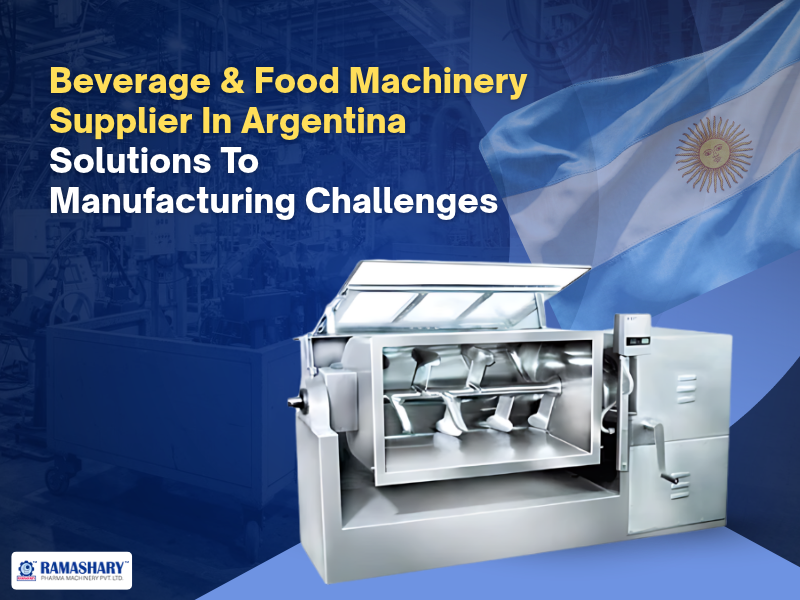
A Ribbon Blender is designed for dry material blending. Its horizontal trough and double-helical ribbon arrangement move ingredients through the mixing chamber to produce a more uniform blend. For manufacturers searching for a ribbon blender supplier in Argentina, the important consideration is not just the machine’s volume. Ingredient characteristics, batch size, mixing time and cleaning requirements should also guide the selection.
How this helps production:
- Supports more uniform mixing when the machine is correctly matched to the formulation.
- Helps reduce manual mixing requirements.
- Allows manufacturers to plan batch sizes around production demand.
- Supports repeatable processing conditions across batches.
Solution 2: Handling Different Raw Materials & Formulations
Argentina’s food manufacturers work with a wide variety of agricultural and food-based materials. Flour, spices, grains, fruit ingredients, dairy components and beverage formulations do not behave in the same way during processing.
Some materials require dry blending. Others need wet mixing, controlled heating or moisture removal. Using one machine for every application without checking its suitability can create processing difficulties. Our food machinery range includes equipment such as Mass Mixers, Ribbon Blenders and Tray Dryers. Each serves a different processing purpose.
Dedicated machines are provided for respective applications The machines are made to support multiple formulations and multi-product versatility. They can be used as standalone equipment as well as integrated into the existing production lines.
How this helps production:
- Matches the equipment to the physical properties of the raw material.
- Supports different processing stages within a manufacturing facility.
- Helps manufacturers assess whether they need mixing, drying or both.
- Reduces the risk of selecting machinery that is unsuitable for the intended product.
As an experienced food machinery supplier in Argentina, we understand these material differences rather than simply offering a standard machine catalogue.
Solution 3: Addressing Production Challenges & Capacity Requirements
A manufacturing facility may have sufficient raw materials and customer demand but still struggle to increase output. The challenge could be an undersized mixing vessel, slow drying cycles, manual material handling or an inefficient sequence between processing stages.
Increasing machine capacity alone does not always solve the problem. Manufacturers must first identify where production is losing time. We provide machinery in different configurations and capacities depending on the equipment and production requirements.
For a manufacturer planning expansion, the evaluation should include:
- Current batch size and daily production targets.
- Number of batches required per shift.
- Material loading and unloading time.
- Processing time for each stage.
- Space available for machinery installation.
- Expected production requirements over the next few years.
This information helps determine whether the facility needs a larger machine, an additional processing unit or a better production arrangement.
Solution 4: Supporting Hygiene & Food Safety Requirements
Food manufacturing requires careful control over material contact surfaces, cleaning procedures and the risk of cross-contamination. A machine that is difficult to clean can create operational complications when manufacturers process multiple formulations.
We follow CE, WHO-cGMP, GMP, ISO 9001:2015, ASME BPE, SCADA, 21 CFR, Industry 4.0 standards and international validation protocols. We also provide end-to-end documentation, including the IQ, OQ, DQ and FAT reports and MOC certificates. This further helps manufacturers maintain compliance and meet the regulatory requirements.
How this helps production:
- Encourages hygiene requirements to be considered before procurement.
- Helps manufacturers assess cleaning access and product-contact materials.
- Supports better planning for product changeovers.
- Reduces the possibility of overlooking sanitation requirements during machine selection.
Solution 5: Managing Processing Time & Operating Costs
Production costs are influenced by more than the purchase price of machinery. Energy consumption, processing time, labour requirements, material losses and cleaning downtime all contribute to the cost of manufacturing.
As a food and juice manufacturing machinery supplier in Argentina, we provide machines that support fast changeovers. Accurate process controls, PLC/HMI integration and IoT readiness for real-time insights help reduce errors. Similarly, manual errors can be reduced by adding the required levels of automation. This is how batch consistency can be maintained, processing time can be decreased, material can be saved from getting wasted and operating costs can be reduced over time.
How this helps production:
- Helps identify processing stages that require improvement.
- Supports equipment selection based on the actual production cycle.
- Helps reduce avoidable manual handling where suitable equipment can perform the operation.
- Allows buyers to evaluate operating requirements alongside the initial investment.
For manufacturers looking for food processing machinery in Argentina, the long-term operating cost should be part of the procurement decision.
Solution 6: Reducing Unplanned Downtime & Maintenance Difficulties
Orth an der Donau in Lower Austria is the easternmost production site in the country. A site with this profile lives on precision. QC teams measure everything. They are also the people who notice when a machine causes variation. Buyers in Orth tend to ask detailed questions about surface finish, calibration, and traceability.
Our machines are manufactured for operator safety and ease of operations. We provide instruction and maintenance manuals and end-to-end solutions covering every stage.
Pre-fabrication stage: Understanding your requirements, process and space analysis and suggestion of the best options.
Fabrication stage: Machine design, engineering and manufacturing.
Post-fabrication stage: Site installation, commissioning, operator training, documentation, ongoing after-sales service and assured spare parts.
How this helps production:
- Helps operators understand the correct use of machinery.
- Makes spare parts and service arrangements part of the purchasing discussion.
- Supports better preparation for equipment maintenance over its operating life.
A reliable food machinery supplier in Argentina should be assessed not only on the machine supplied but also on the support available after installation.
Solution 7: Selecting A Machinery Partner For Long-Term Business Growth
A machinery purchase can influence a manufacturer’s production capabilities for years. This makes supplier evaluation an important part of business planning.
Our machines come in different capacities for small-scale and large-scale manufacturing. Also, these machines are designed for scalability in future. This makes us more than just a food machinery supplier in Argentina. It makes us your business growth partner.
How this helps production:
- Creates a clearer understanding of the machinery investment.
- Helps align equipment specifications with business objectives.
- Reduces the risk of purchasing machinery without evaluating process requirements.
- Supports planning for future production expansion.
Best Food & Beverage Processing Machines for Argentina’s Manufacturing Industry
Ramashary Pharma Machinery Pvt. Ltd. provides machinery for food and beverage applications, including mixing, blending, drying and liquid-processing equipment. The following machines are worth evaluating for suitable food-processing applications in Argentina.
Working principle
A Mass Mixer uses rotating paddles or agitators to move ingredients inside a mixing chamber. The mechanical action folds, turns and redistributes the material until the required consistency is achieved.
1. Mass Mixer
Primary operation: Wet and dry ingredient mixing
A Mass Mixer combines ingredients that require mechanical mixing. It can handle suitable dry, wet and semi-solid materials depending on its configuration. For food manufacturers, this type of equipment can be considered for mixing flour-based ingredients, spice preparations, snack mixtures and selected food formulations.
The process begins by loading the measured ingredients into the mixing chamber. The operator starts the machine and the rotating paddles move the material through the vessel. Where the formulation requires liquid ingredients, these can be introduced in controlled quantities if the machine is designed for wet mixing.
After the required mixing time, the material is discharged for the next production stage. Depending on the machine design, a tilting arrangement can help simplify unloading.
Materials it can handle
Depending on the machine configuration, possible materials include:
- Flour and gram flour.
- Selected spice and seasoning mixtures.
- Wet and dry snack ingredients.
- Dough-like and semi-solid food mixtures.
- Other compatible food formulations.
Real-world food products and applications
A Mass Mixer may support the preparation of flour mixtures for savoury snacks. It can also be considered for selected bakery preparations, seasoning mixtures and food formulations that require wet and dry ingredients to be combined.
2. Steam Heated Paste Kettle
Primary operation: Heating and mixing semi-solid materials
Food manufacturers often work with ingredients that need heating while being continuously stirred. These may include starch-based preparations, sauces, gravy bases and selected pastes. The Steam Heated Paste Kettle can be considered for such applications when its construction and process configuration are suitable for the food product.
Working principle
The kettle uses a steam-heated jacket to transfer heat to the material inside the vessel. An agitator moves the mixture during heating to help distribute heat and maintain the required consistency.
The process begins by charging the ingredients into the kettle. Steam passes through the jacket surrounding the vessel, heating the material indirectly. At the same time, the agitator moves the mixture to reduce uneven heating and help prevent lump formation.
Once the required processing condition is achieved, the product can be discharged. Ramashary lists tilting and non-tilting kettle configurations according to requirements.
Materials it can handle
Depending on the design and formulation, suitable applications may include:
- Starch-based food mixtures.
- Selected semi-solid preparations.
- Sauce and gravy bases.
- Jelly and paste formulations.
- Other heat-processed mixtures compatible with the kettle.
Real-world food products and applications
A food manufacturer producing sauces or gravy bases may need to heat and mix ingredients until they reach a defined consistency. A starch-based preparation may also require controlled heating and continuous agitation to reduce lump formation.
Capacity range: 10 L to 500 L.
3. Tray Dryer
Primary operation: Batch drying of food materials
Moisture control is important in food manufacturing. Excess moisture can affect storage stability, texture and the quality of dried ingredients. A Tray Dryer is a batch-processing machine used to remove moisture from materials spread across trays. It can be used by food manufacturers processing herbs, spices, fruits, vegetables and other suitable solid ingredients.
Working principle
A Tray Dryer uses heated air to remove moisture from the material. The prepared material is spread evenly across trays. These trays are then placed inside the drying chamber. A heating system warms the air and a fan circulates it through the chamber.
As the heated air passes over the material, moisture evaporates from the product surface and moves into the air. The moisture-laden air is removed through the exhaust arrangement. The operator selects the required drying conditions based on the material, its initial moisture content and the desired final moisture level.
Materials it can handle
Suitable applications may include:
- Herbs such as mint and basil.
- Spices such as turmeric and chilli.
- Sliced fruits such as apples and bananas.
- Selected vegetables such as onions.
- Other solid food ingredients suitable for tray drying.
Real-world food products and applications
A food-processing company producing dried fruit ingredients may use a Tray Dryer to remove moisture from prepared fruit slices. Spice manufacturers may also evaluate it for drying suitable herbs and spices before grinding or packaging.
4. Liquid / Sugar Syrup Manufacturing Plant
Primary operation: Preparation and processing of liquid formulations
Beverage manufacturers often require syrup preparation before blending, dilution or other downstream operations. The consistency of the syrup base can influence the final beverage formulation.
A Liquid / Sugar Syrup Manufacturing Plant can be evaluated for suitable syrup and liquid preparation applications. For food and beverage use, the plant’s design must be confirmed for the intended ingredients, product-contact requirements and cleaning procedures.
Working principle
It is a plant comprising three main vessels:
- Sugar melting vessel.
- Manufacturing vessel.
- Product storage vessel.
The process begins with the preparation of the sugar solution in the melting vessel. The solution is then transferred through a filtration arrangement to the manufacturing vessel. Mixing and homogenisation take place in the manufacturing vessel. An in-line homogeniser can recirculate the product to help achieve the required consistency or viscosity.
After processing, the liquid is transferred to the storage vessel through the plant’s transfer arrangement. For a food or beverage application, the exact process sequence, filtration arrangement, heating requirements and product-contact materials must be finalised according to the formulation.
Materials it can handle
Subject to food-grade configuration and application approval, potential ingredients for syrup preparation may include:
- Granulated sugar.
- Water.
- Suitable liquid flavouring ingredients.
- Other compatible formulation components.
- Ingredients used in sugar-based beverage concentrates.
These are the factors to be considered while selecting juice manufacturing machinery supplier in Argentina.
Real-world food products and applications
Potential applications include syrup bases for flavoured beverages, soft drinks and selected confectionery preparations. This machine should not be confused with a complete juice extraction, pasteurisation or bottling line.
Capacity range: 50 L to 10,000 L
5. Ribbon Blender
Primary operation: Dry powder and ingredient blending
Food manufacturers frequently combine several dry ingredients to create a uniform formulation. These may include flour, spices, seasoning powders, powdered beverage ingredients and other compatible materials. A Ribbon Blender is designed for dry material blending. It can be considered by manufacturers that require controlled mixing of larger quantities of suitable powders.
Working principle
A Ribbon Blender consists of a horizontal U-shaped mixing trough containing a double-helical ribbon agitator. The material is loaded into the trough. When the machine operates, the ribbons move the ingredients in different directions. The outer ribbon generally moves material in one direction while the inner ribbon moves it in the opposite direction.
This movement creates circulation within the mixing chamber and helps distribute the ingredients throughout the batch. After the required mixing cycle, the material is discharged through the outlet.
Materials it can handle
Depending on the material characteristics and machine configuration, applications may include:
- Flour and starch powders.
- Spice and seasoning powders.
- Dry beverage premixes.
- Powdered food ingredients.
- Selected nutritional and protein-based powders.
Real-world food products and applications
It may support the preparation of seasoning blends used for packaged snacks, provided the ingredients have compatible flow and mixing characteristics.
Capacity range: 50 L to 12,000 L
6. Octagonal Blender
Primary operation: Gentle blending of dry powders and granules
Not every food ingredient requires intensive mixing. Some dry powders and granules benefit from a tumbling action that redistributes the ingredients without relying on high-speed mechanical agitation. An Octagonal Blender can be considered for suitable dry food ingredients where gentle blending is required.
Working principle
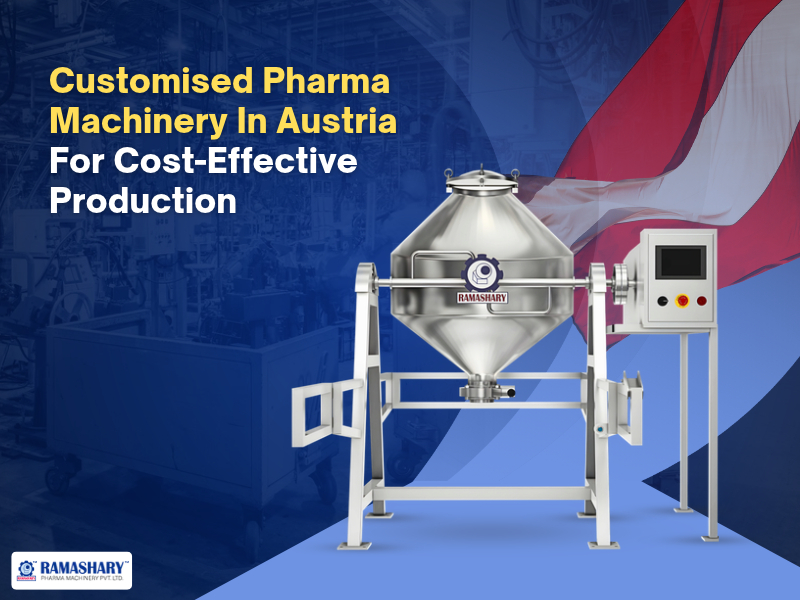
The machine consists of an octagonal mixing bin that rotates around its axis. The ingredients are loaded into the bin and the motor drives the vessel through a reduction gearbox.
As the bin rotates, the material tumbles and moves from one section to another. Internal baffles help influence the movement of the ingredients and improve the blending action. The repeated movement helps distribute the ingredients throughout the batch. After the mixing cycle, the material is discharged through the outlet.
Materials it can handle
Depending on the product and machine configuration, it can handle:
- Dry spice blends.
- Seasoning powders.
- Selected powdered beverage ingredients.
- Dry food premixes.
- Compatible granulated ingredients.
Real-world food products and applications
A manufacturer producing packaged seasoning powders may need to combine salt, spices and other dry ingredients in consistent proportions. An Octagonal Blender can be considered for this blending operation. It may also be evaluated for selected dry premixes and granulated food ingredients where the gentle tumbling action is suitable.
Capacity range: 5 L to 12,500 L
7. Fluid Bed Dryer
Primary operation: Drying of suitable granules and particles
Food manufacturers producing instant mixes, seasoning ingredients and other granular products may need a drying process that provides consistent contact between the material and heated air. A Fluid Bed Dryer uses upward-moving heated air to suspend and move suitable particles during drying. It can be considered for materials that can be effectively fluidised.
Working principle
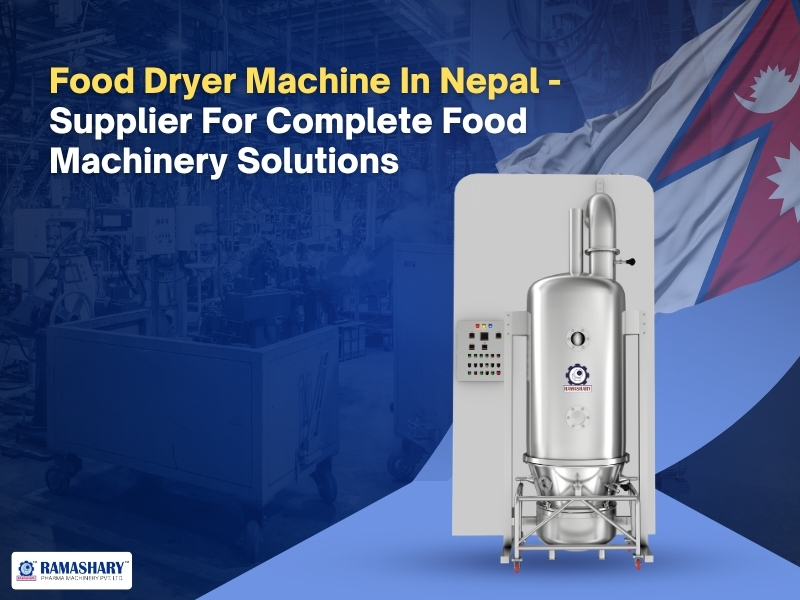
The prepared wet granules or suitable particulate material are loaded into the drying chamber. Heated air enters from below through a perforated distribution plate. When the airflow reaches the required velocity, the particles become suspended and move continuously within the chamber.
This fluidisation exposes the particles to the heated air. Moisture evaporates from the material and leaves through the exhaust system. The operator controls the process parameters according to the product’s drying characteristics and the required final moisture content.
Materials it can handle
Depending on particle size, density, moisture content and flow characteristics, potential food materials include:
- Suitable spice and seasoning granules.
- Instant soup ingredients.
- Granulated beverage ingredients.
- Selected cereal-based particles.
- Suitable dairy-based granules and powders.
Very sticky, cohesive or excessively wet materials may not fluidise properly in a conventional system. Product trials or technical evaluation may be required before finalising the equipment.
Real-world food products and applications
A manufacturer producing instant soup mixes may require a drying stage for suitable granulated ingredients. Similarly, a producer of instant beverage ingredients may evaluate fluid bed drying for particles that can be effectively suspended by heated air. The process can also be considered for suitable spice and seasoning granules where moisture control is important.
Capacity range: 5 kg to 500 kg
Is Your Current Machinery Limiting Your Production Capacity?
FAQs
1. Can you customise beverage machinery according to our production capacity?
Yes, we discuss your batch size, hourly output and production targets before finalising the machine specifications. This helps us recommend a configuration before supplying the syrup manufacturing plant in Argentina according to your manufacturing requirements.
2. Can your Paste Kettle process high-viscosity food products?
Our Steam Heated Paste Kettle is designed for heating and mixing suitable paste formulations. We evaluate product viscosity and heating requirements to determine its suitability for your application.
3. Do you offer SS304 and SS316L machinery construction?
Yes, we offer SS 304/316L machinery construction. Based on the materials to be processed, the output product and other manufacturing conditions, the suitable material can be utilised for engineering and supplying food processing machinery in Argentina.
4. Can your equipment handle continuous production?
Yes, we can engineer equipment that handles continuous production. We assess batch requirements, processing time and material flow before recommending a suitable configuration. We also provide ongoing after-sales service and assured spare parts, as a supplier of food machinery in Argentina, for maximum production uptime.
5. How do you support manufacturers planning future production expansion?
We consider present production requirements alongside expected capacity increases. We understand your existing process and business goals and manufacture scalable machines accordingly.
Conclusion
Argentina’s food and beverage sector continues to offer opportunities for manufacturers willing to invest in better production capabilities, product development and operational efficiency. Machinery procurement is not simply a purchase decision. It is a long-term investment in the reliability and direction of a manufacturing business.
At Ramashary Pharma Machinery Pvt. Ltd., we believe every manufacturing requirement deserves a technically sound approach. We work towards understanding what manufacturers need before recommending equipment for their applications.
If you are evaluating machinery for a new facility or considering your next equipment investment in Argentina, discuss your requirements with our team. Achieve your manufacturing goals with the right engineering approach.